Master Clarity in Writing: Your Guide to Effective Communication
Learn how to achieve clarity in writing with expert tips. Enhance your communication skills and make your message clear and impactful every time.
Posted by
 Mathias Michel
Related reading
How to Refresh Models in LM Studio (Fix "No model loaded")
A practical guide to refresh models in LM Studio, rescan your model list, and fix the "No model loaded" error in apps like RewriteBar.
How to Use RewriteBar with LM Studio
Learn how to integrate RewriteBar with LM Studio for local AI processing. Complete setup guide including LM Studio installation, model configuration, and RewriteBar provider setup.
How to Use RewriteBar with Ollama
Learn how to integrate RewriteBar with Ollama for local AI processing. Complete setup guide including Ollama installation, model configuration, and RewriteBar provider setup.
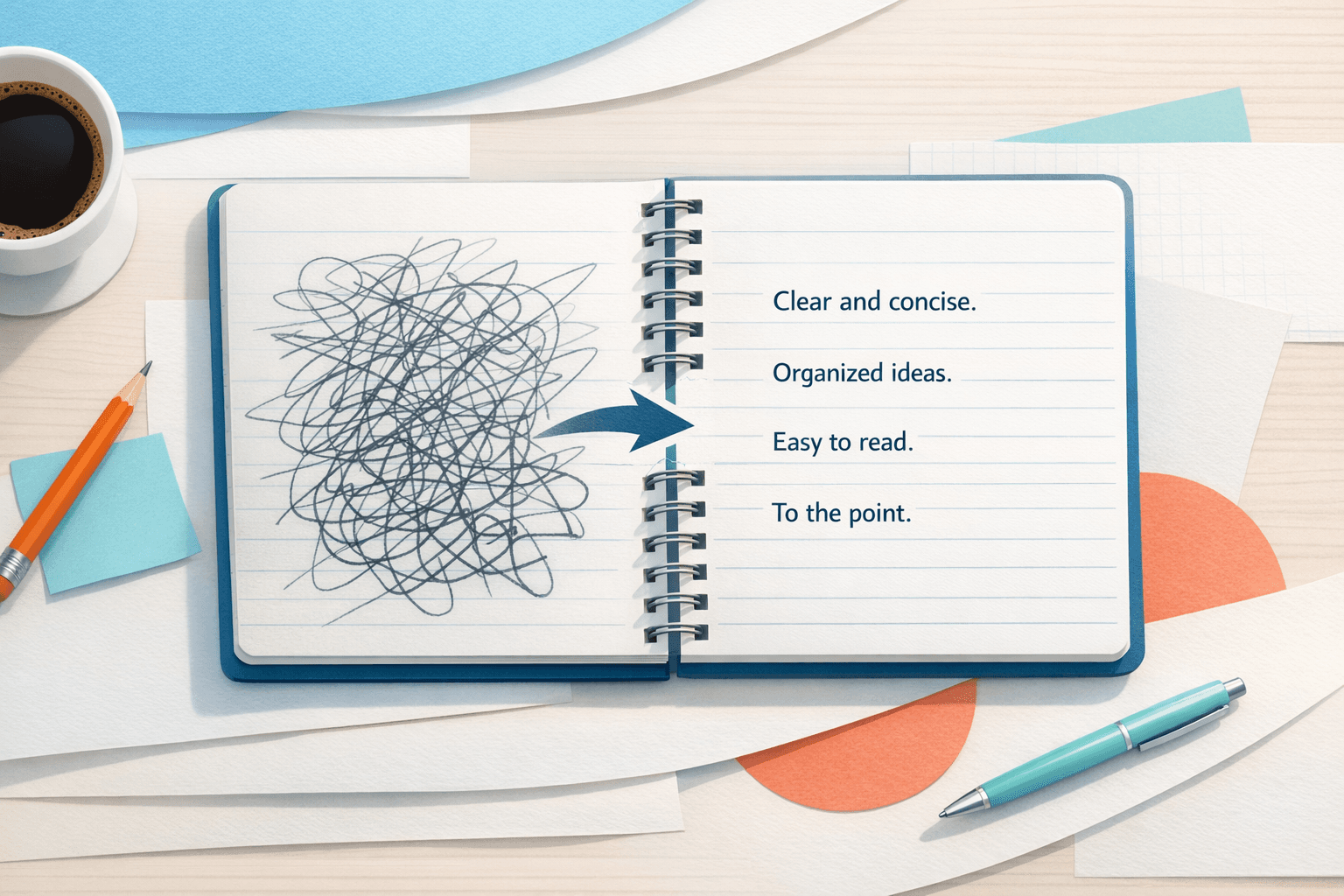
Master Clarity in Writing: Your Guide to Effective Communication
Clear writing gets results. It helps people understand your point fast and act with confidence.
When writing feels unclear, readers lose focus. They skip key details, make wrong assumptions, or stop reading.
This guide breaks down practical ways to write with clarity in real work: emails, reports, product docs, blog posts, and social media.
Why Clarity in Writing Matters
Clarity in writing reduces friction. Your message is easier to process, which improves trust and speeds up decisions.
In teams, clear writing cuts back-and-forth. In marketing, it makes value easy to understand. In customer support, it lowers confusion and improves satisfaction.
Great ideas can fail if the writing is hard to follow. Clarity is what turns ideas into action.
The Five Pillars of Clear Writing
1. Structure and Flow
Organize information in a logical order. Use headings, short paragraphs, and lists to guide the reader.
A clear structure helps people scan quickly and still understand the main point.
2. Precise Word Choice
Pick words that say exactly what you mean. Replace vague terms like "good" or "things" with specific language.
Precision reduces ambiguity and makes your writing more useful.
3. Audience Awareness
Write for the reader, not for yourself. Match your vocabulary and detail level to what your audience already knows.
Experts and beginners need different explanations.
4. Purpose Alignment
Each piece of writing should have one clear goal: inform, persuade, explain, or request action.
Your purpose should shape tone, structure, and level of detail.
5. Context Fit
Adapt your writing style to the format. A technical guide, sales page, and status update each need a different clarity strategy.
Strong writers adjust without losing the core message.
Know Your Audience Before You Write
Audience analysis is the fastest path to clearer writing.
Use these questions before drafting:
- Who is reading this?
- What do they already know?
- What decision or action do they need to take?
- Where might they get confused?
If you can answer these early, your writing gets sharper and shorter.
Use Structure to Improve Comprehension
A strong structure makes complex ideas easier to understand.
Common patterns you can use:
- Chronological: for step-by-step instructions
- Problem-solution: for proposals and persuasive writing
- Comparison: for product or option evaluation
- Cause-effect: for analysis and explanation
Add transitions between sections so readers can follow your logic without friction.
Choose Language That Does Real Work
Clarity grows when every sentence has a job.
Practical fixes:
- Replace broad adjectives with measurable details
- Break long sentences into shorter ones
- Prefer active voice when possible
- Remove filler phrases that do not add meaning
Small edits like these quickly improve readability.
Adapt Clarity to Different Formats
Clear writing is not one-size-fits-all.
- Business writing: direct, concise, action-focused
- Academic writing: precise, evidence-based, carefully defined
- Technical writing: accurate, complete, easy to execute
- Creative writing: expressive, but still easy to follow
- Digital writing: scannable, structured, mobile-friendly
Pick the format first, then shape the writing around it.
The Clarity Editing Checklist
Use this quick pass before publishing:
- Read it out loud and mark awkward phrasing.
- Replace vague words with specific language.
- Check pronouns and references for ambiguity.
- Split long sentences and tighten transitions.
- Confirm each section supports the main goal.
- Remove lines that repeat the same point.
- Ask for focused feedback on confusing sections.
This process turns decent drafts into clear, high-impact writing.
Common Clarity Mistakes to Avoid
- Writing to impress instead of writing to explain
- Overloading one paragraph with multiple ideas
- Using jargon without defining it
- Hiding the main point deep in the text
- Skipping revision and publishing first draft language
Clear writing is built in editing, not in the first pass.
Final Takeaway
Clarity in writing is a practical skill you can train. Start with structure, write for your audience, use precise language, and edit with intent.
When your writing is clear, people understand faster, decide faster, and trust your message more.
If you want help refining wording, tone, and readability in daily work, RewriteBar can speed up your editing flow in any macOS app.