Master Clarity in Writing: Your Guide to Effective Communication
Learn how to achieve clarity in writing with expert tips. Enhance your communication skills and make your message clear and impactful every time.
Written by
 Mathias Michel
Why Clarity in Writing Matters More Than Ever
In our fast-paced world, information overload is a constant. This makes clear writing crucial for getting your message heard. Unclear writing creates confusion, frustration, and ultimately, causes people to disengage. We've all experienced the frustration of trying to decipher a dense, jargon-filled webpage – and likely abandoned it quickly. Honing your communication skills is essential for success in any field.
This applies to all communication, from emails and reports to website copy and social media posts. Consider a marketing email for a new product. Ambiguous language could lead to customers misunderstanding the product's features and benefits, resulting in lost sales. Clear writing directly impacts results.
The Impact of Clarity in Decision-Making
Clear writing is paramount for good decision-making. Concise information empowers informed choices. Conversely, unclear writing obscures important details, leading to poor decisions based on incomplete data. Clarity also builds trust. Transparent, easy-to-understand writing strengthens your credibility as a reliable communicator.
The growing field of AI-powered writing tools highlights the increasing importance of clarity. By 2025, AI writing saw widespread adoption, with North America and Asia leading the way. This growth stems from AI's ability to improve clarity and efficiency in content creation, especially in content marketing and multilingual publishing. In China, 78% of technology companies use AI for content generation, primarily for social media and e-commerce. These tools create focused, engaging content that resonates with global audiences.
Clarity as a Competitive Advantage
Mastering clear writing provides a competitive edge. In professional settings, clear communication streamlines workflows, minimizes misunderstandings, and improves teamwork. For creative projects, clear writing helps your ideas connect with the audience, whether you're writing a story, marketing copy, or online content.
Even the best ideas lose their impact if poorly expressed. Clear writing isn't just about being understood; it's about making an impact. Clear, concise, and engaging writing empowers your audience to understand, appreciate, and act on your message, ultimately contributing to greater success.
The Five Pillars of Crystal-Clear Communication
Clarity in writing goes beyond simple vocabulary. It's about crafting a message that effortlessly connects with your reader. This involves understanding how readers process information and using techniques to optimize comprehension. This section explores five key elements of crystal-clear communication.
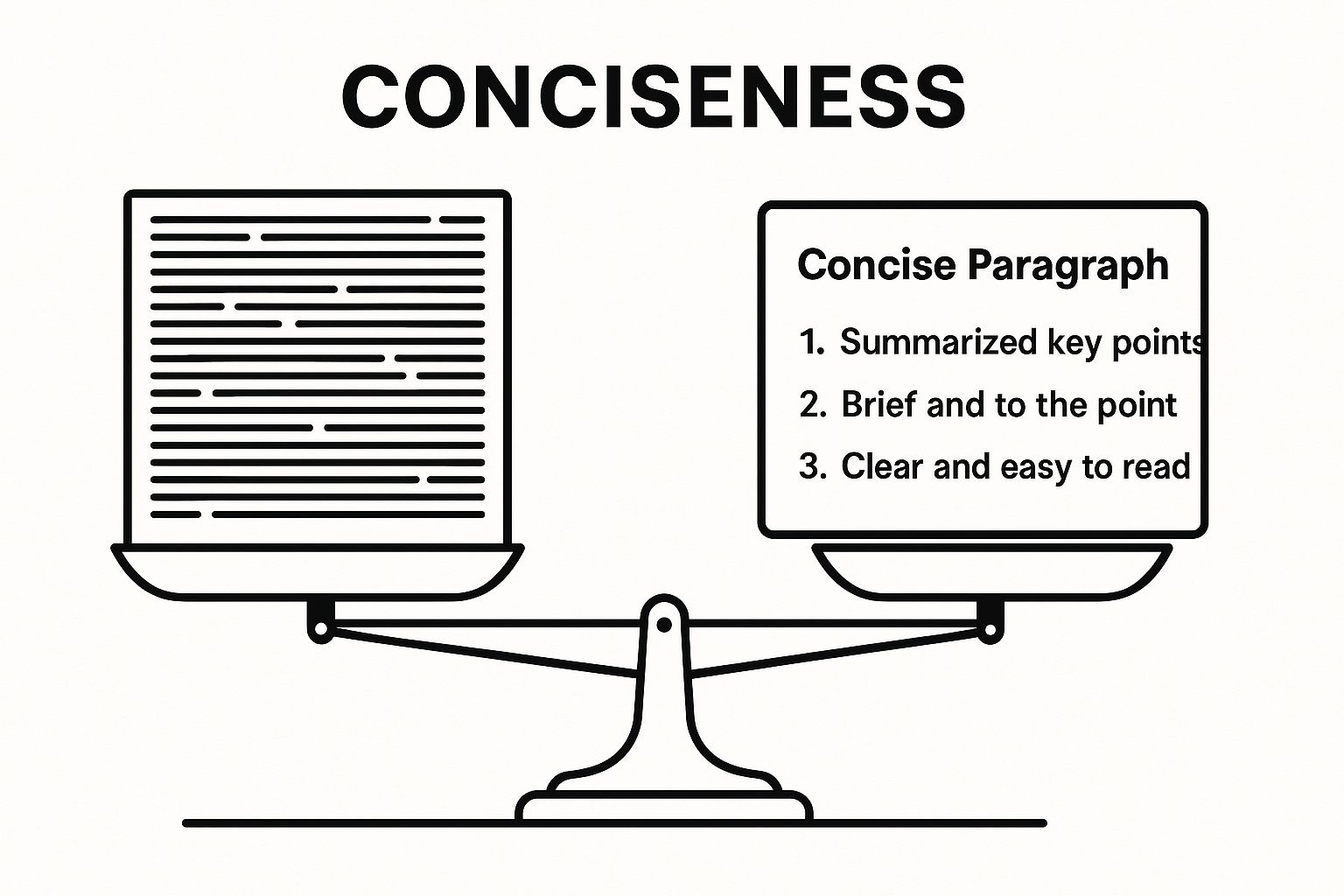
This infographic illustrates the difference between concise and dense text. As the image shows, clarity often comes from brevity and focus, not excessive wording. This emphasizes the importance of eliminating unnecessary words and phrases for stronger meaning.
Structure and Organization
Well-structured writing allows readers to easily follow the flow of information. This means using headings, subheadings, bullet points, and other formatting tools to create a clear visual hierarchy. It's like building a house: a strong foundation and framework are crucial before adding details. Numbered lists, for example, make step-by-step instructions easier to follow.
Word Choice and Precision
Choosing the right words is essential. Precise language eliminates ambiguity and ensures accurate interpretation. Instead of saying "walked," consider "strolled," "marched," or "sauntered." Each word evokes a different image and adds depth to your meaning. Also, avoid jargon and complex terms unless your audience understands them.
To help illustrate the difference between clear and unclear writing, let's look at a comparison table:
This table contrasts characteristics of clear writing with unclear writing to help readers identify and fix clarity issues in their own work.
| Element | Clear Writing | Unclear Writing | Impact on Reader |
|---|---|---|---|
| Structure | Logical flow, uses headings and subheadings | Disorganized, lacks clear transitions | Confusion, difficulty understanding the main points |
| Word Choice | Precise, specific words | Vague, ambiguous language | Misinterpretation, lack of engagement |
| Sentence Structure | Concise, varied sentences | Long, complex sentences | Difficulty processing information, reduced comprehension |
| Tone | Consistent, appropriate for the audience | Inconsistent, inappropriate tone | Loss of credibility, disengagement |
| Examples | Relevant, illustrative examples | Irrelevant, confusing examples | Lack of clarity, reduced understanding |
As the table highlights, clear writing uses precise language, logical structure, and appropriate tone to enhance reader comprehension. Unclear writing, on the other hand, often suffers from vague language, poor organization, and an inconsistent tone, leading to reader confusion.
Audience Awareness
Understanding your audience is key for effective communication. Clarity means tailoring your message to their knowledge level and understanding. What's clear to a technical expert might confuse a layperson. This requires understanding their background, interests, and potential challenges.
Purpose and Context
Your writing's purpose should guide your clarity strategies. A persuasive piece requires a different approach than an informative one. This means adjusting your tone, style, and vocabulary to the context. For example, a formal report demands more formality than a blog post. You might be interested in: How to master...
Putting it All Together
These five pillars work together to create truly clear writing. Focusing on structure, word choice, audience, purpose, and context ensures your message is understood, remembered, and acted upon. This is crucial for complex topics, where clarity can mean the difference between confusion and comprehension. This builds trust and credibility with your readers, strengthening your communication's overall impact.
Know Your Audience: The Master Key to Clarity
Clarity in writing isn't a universal concept. What captivates one reader might confuse another. This makes understanding your audience crucial for achieving true clarity. Just as a stand-up comedian tailors their jokes to a particular crowd, writers must adapt their language, tone, and examples. This section explores how effective communicators refine their clarity strategies through audience analysis.
Analyzing Your Readers
Effective communication begins with knowing your target audience. This involves analyzing their:
-
Knowledge Level: Are they experts comfortable with technical jargon, or beginners needing simpler explanations? For instance, explaining blockchain technology to a software engineer requires a different approach than explaining it to someone new to coding.
-
Expectations: What information are they seeking? What questions need answers? Understanding their expectations guides your content and ensures you address their specific needs.
-
Potential Confusion Points: Anticipating where your audience might struggle allows you to address these challenges proactively, ensuring your message is easily understood.
Gathering Audience Intelligence
How do you gain these crucial insights? Several practical techniques exist for gathering audience intelligence:
-
Surveys and Questionnaires: Directly asking your target audience about their background, interests, and needs offers valuable data to shape your writing.
-
Analytics: Website analytics like Google Analytics can reveal what content resonates, offering clues about audience preferences and interests.
-
Social Media Listening: Monitoring social media conversations reveals real-time insights into your audience's thoughts, questions, and pain points. Tools like Brand24 can be valuable for this purpose.
-
Feedback Forms: Encourage readers to provide feedback on your writing to identify areas for improvement and refine your clarity strategies.
Globally, literacy rates are a factor influencing clarity. Approximately 773 million adults worldwide lack basic literacy skills, impacting effective communication. Discover more insights about global literacy rates. This highlights the importance of adapting your writing for broader accessibility.
Developing Audience Personas
A powerful technique for understanding your audience is developing audience personas. These are fictional representations of your ideal readers, encompassing their demographics, professional background, goals, and challenges. Personas provide a tangible focus for clarity decisions, ensuring your writing resonates with your target audience.
Contextualizing Clarity
Different professional contexts demand different clarity approaches. Technical writing emphasizes precision and accuracy, while creative writing might prioritize evocative language and storytelling. Business writing aims for conciseness and action-oriented language, while educational writing focuses on accessibility and clear explanations.

This image visualizes the connection between communication and understanding. A successful message bridges the gap between sender and receiver, creating shared understanding. This underscores the vital role of audience awareness in achieving clarity. By understanding your audience, you build a bridge of clear communication, ensuring your writing is not only read but also understood and acted upon.
Structural Magic: Organizing Ideas for Maximum Impact
Clarity in writing depends on more than just choosing the right words; it's also about structuring your ideas effectively. Think of it like building a house: even with the best materials, you need a solid blueprint. Similarly, even the most brilliant ideas lose their impact if they're poorly organized. This section explores how strategic information structuring guides readers and enhances clarity.
Why Structure Matters
Readers often struggle with poorly structured content. It lacks a clear path, leaving them feeling lost and frustrated, much like navigating a city without a map. A well-defined structure, on the other hand, acts as a roadmap, guiding readers through even the most complex topics. This allows them to quickly grasp the core message and retain information more effectively.
Organizational Patterns for Clarity
Just as architects use different blueprints for various buildings, writers can employ different organizational patterns to suit their content:
-
Chronological Order: Perfect for narratives, historical accounts, or step-by-step instructions. This structure presents information in a time-based sequence, making it easy to follow. A recipe, for example, follows chronological order to ensure the cook adds ingredients correctly.
-
Problem-Solution: This structure is highly effective for persuasive writing or presenting analyses. It begins by defining a problem and then presents a solution. This framework clearly illustrates cause and effect, improving comprehension.
-
Comparison-Contrast: Use this pattern to highlight similarities and differences between concepts or products. Presenting information side-by-side allows readers to quickly grasp the key distinctions. A product comparison chart is a great example of this structure in action.
-
Cause and Effect: This structure explains how one event leads to another. It's particularly useful for scientific explanations, historical analysis, or persuasive arguments where understanding the relationship between cause and effect is crucial.
Let's look at how these elements impact reading comprehension in more detail:
To further illustrate these concepts, the following table provides a breakdown of how different structural elements can impact reading comprehension:
Introduction to Table: The table below provides a summary of how different structural elements can be implemented and their effect on comprehension, demonstrating the practical application of these techniques.
| Structural Element | Comprehension Improvement | Implementation Difficulty | Best Use Cases |
|---|---|---|---|
| Chronological Order | High | Low | Narratives, historical accounts, step-by-step instructions |
| Problem-Solution | Medium | Medium | Persuasive writing, analyses, proposals |
| Comparison-Contrast | High | Medium | Product comparisons, concept analysis, highlighting key differences |
| Cause and Effect | Medium | Medium | Scientific explanations, historical analysis, persuasive arguments |
Conclusion of Table: As shown in the table, simple structural elements like chronological order can significantly improve comprehension with relatively low implementation difficulty. More complex structures like problem-solution or cause-and-effect offer substantial benefits but require more careful planning.
Transitions and Signposting: Guiding the Reader
Transitions act as bridges between different sections of your writing. They ensure a smooth flow of ideas, preventing jarring shifts and keeping the reader engaged. Signposting, using phrases like "First," "Next," or "Finally," acts like road signs, guiding readers through your arguments and helping them anticipate what's coming next. Using phrases like "in addition to" or "however" clarifies the relationships between ideas.
Visual Hierarchy: Enhancing Readability
Using headings, subheadings, bullet points, and white space improves both the visual appeal and clarity of your writing. These elements create a visual hierarchy, making it easier for readers to scan the text and identify key information. A well-designed website, for example, uses visual hierarchy to guide your eye to the most important content. This enhances comprehension and makes the reading experience more enjoyable, especially for online content where readers often skim.
Precision Language: Words That Do Heavy Lifting
Clarity in writing depends heavily on choosing the right words. Master communicators know that precision in language is essential. This isn't about using a large vocabulary, but about selecting words that convey the exact intended meaning—nothing more, nothing less. Think of it as a surgeon wielding a scalpel: the correct tool, used precisely, achieves the desired result.
Identifying and Replacing Vague Terms
Vague language obscures your message. Words like "things," "stuff," "good," or "bad" lack specificity and can be misinterpreted. Instead of writing "The product is good," explain why it's good: "The product is efficient, user-friendly, and cost-effective." Substituting vague terms with precise alternatives removes ambiguity and strengthens your writing.
Balancing Technical Accuracy with Accessibility
Finding the right balance between technical accuracy and accessibility is critical, particularly in specialized fields. While technical terminology is important for precision, it can be confusing for readers unfamiliar with the jargon. Skilled writers understand when specialized terms are necessary and when simpler language will do. For instance, a doctor might use the term "myocardial infarction" with colleagues but explain it as a "heart attack" to a patient.
This principle applies to many professional situations. Take software documentation as an example: developers need precise technical descriptions, while end-users require clear, jargon-free instructions. This careful balance between accuracy and accessibility improves clarity for a broader audience.
Common Word-Choice Pitfalls and How to Fix Them
Even seasoned writers sometimes fall into common word-choice traps. Imprecise pronouns, for example, can create confusion about the subject. Misplaced modifiers can change a sentence's meaning, while passive voice can obscure the actor and weaken the writing.
Consider the sentence, "Walking down the street, the tree caught my eye." This implies the tree was walking. Rewriting it as "Walking down the street, I noticed the tree" clarifies the meaning. Identifying and correcting these subtle clarity issues significantly improves writing quality.
The Growing Importance of Clarity
The global content writing services market is expanding rapidly, projected to grow at a CAGR of 5.50% from 2023 to 2030. This demonstrates the increasing need for clear and effective writing. In 2019, the US alone had approximately 48,544 in-house writers and 82,656 freelance writers, highlighting the importance of well-written content. Find more detailed statistics here. Clarity is essential to ensure the intended message resonates with the audience, whether the content is created by a human or AI. This growing need for clear communication emphasizes the importance of continually honing your writing skills.
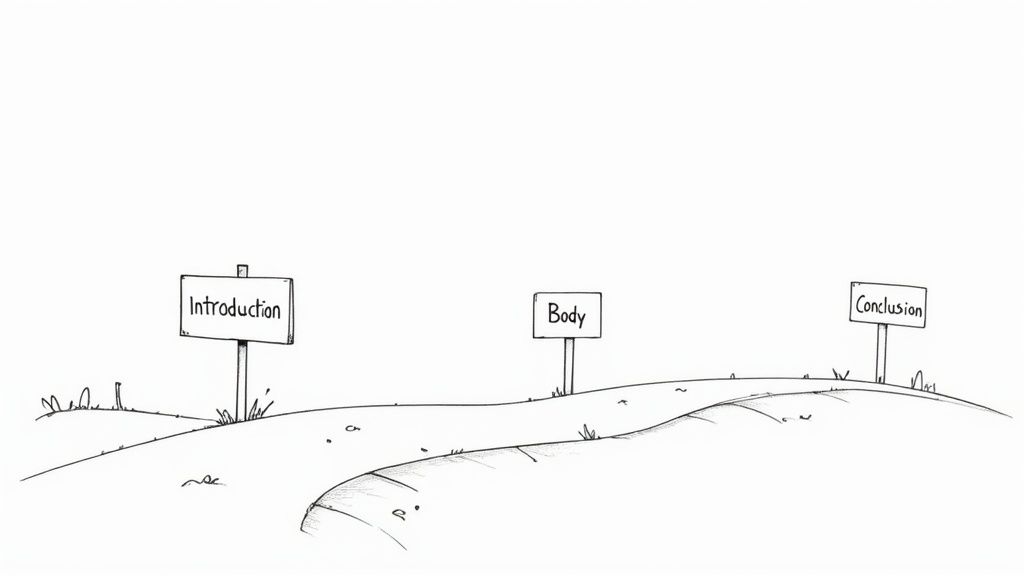
This image symbolizes the significance of selecting the right words, much like an artisan choosing the correct tool. Just as a carpenter wouldn't use a hammer to turn a screw, writers must choose words that precisely suit their purpose.
Practical Exercises for Improved Precision
Developing precise language takes practice. Regularly reviewing your writing and consciously substituting vague language with more specific words improves clarity. Try rewriting a paragraph and using a Thesaurus.com to discover stronger verbs and more descriptive adjectives. This can transform adequate writing into compelling, impactful communication. By practicing precision, you cultivate a writing style that is clear, concise, and effective.
Context-Specific Clarity: Adapting to Different Formats
Clarity in writing is crucial, but its application varies depending on the context. A clear email differs significantly from a clear poem, much like a technical manual contrasts with a marketing campaign. Effective communication hinges on adapting techniques to the specific format and purpose of your writing. This adaptability is the key to ensuring your message resonates, regardless of the platform.
Clarity Across Diverse Formats
Different writing formats demand unique approaches to clarity:
-
Business Writing: In the professional world, clarity prioritizes conciseness and action-oriented language. A concise email requesting information exemplifies this: clarity means being direct while maintaining professionalism.
-
Academic Writing: Academic writing emphasizes precision and rigor. Clarity here often involves using specific terminology and supporting claims with solid evidence. A research paper, for instance, requires clear presentation of data and analysis.
-
Technical Writing: Technical writing focuses on accuracy and detail. Clarity ensures instructions are easy to follow, making complex information digestible. Imagine assembling furniture with vague instructions—clarity becomes essential for successful completion.
-
Creative Writing: Clarity in creative writing can be more nuanced. While still important, it sometimes takes a backseat to elements like imagery and emotional impact. A novel might employ ambiguity for suspense, yet the core narrative must remain clear for the story to resonate.
-
Digital Writing: Online content requires scannable, easily digestible information. Clarity involves using headings, bullet points, and visuals to guide readers. A blog post optimized for readability demonstrates this: clarity boosts engagement and encourages readers to stay.
Balancing Clarity with Other Goals
Clarity is essential, but it isn't the sole objective. Different writing scenarios demand balancing clarity with other aims:
-
Persuasion (Marketing): Marketing materials aim to persuade while maintaining clarity. This involves using clear language to explain benefits while also employing persuasive tactics.
-
Rigor (Academic Writing): Academic writing prioritizes rigorous argumentation. Clarity ensures the argument is easy to follow, but the focus remains on a well-supported, logical presentation.
-
Engagement (Storytelling): Storytelling relies on emotional engagement. While clarity helps understand the plot, writers might prioritize emotional connection through figurative language or descriptive details.
Examples of Adaptability
Skilled communicators adapt clarity principles to various formats:
-
A business email uses short, direct sentences for quick information delivery.
-
A scientific report employs precise terminology and detailed explanations to ensure accuracy.
-
A marketing brochure uses clear language to highlight product benefits and persuasive language to encourage purchase.
-
A novel balances clear storytelling with evocative language and emotional depth to captivate the reader.
By mastering this adaptability, you can communicate effectively in any situation. This flexibility ensures your message connects with your audience, regardless of format or purpose. This makes clarity in writing a potent tool for achieving your communication goals.
The Clarity Edit: Transforming Good Writing to Great
Even exceptional writers rarely produce perfectly clear writing on their first attempt. Achieving true clarity often requires a dedicated revision process. This section explores the systematic approach experienced writers use to refine their work, transforming good writing into great writing.
Step-by-Step Clarity Editing Techniques
Clarity editing involves a focused review of your writing to identify and eliminate potential sources of confusion. This process goes beyond simple proofreading. It's about ensuring your message connects clearly with your intended audience.
Here’s a step-by-step guide:
-
Read Aloud: Hearing your writing spoken can reveal awkward phrasing and confusing sentence structures.
-
Identify Vague Language: Look for words like "things," "stuff," or "very" and replace them with more specific alternatives. For example, instead of "very big," consider using "massive" or "enormous."
-
Check for Ambiguity: Ensure pronouns have clear referents and that sentences can't be interpreted in multiple ways. Consider the sentence: "She gave her the book." Who gave the book to whom? Rewriting it as "Sarah gave Mary the book" clarifies the action.
-
Examine Sentence Structure: Break down long, complex sentences into shorter, more manageable chunks. Aim for variety in sentence length to keep your writing engaging.
-
Evaluate Transitions: Use transitional words and phrases to connect ideas smoothly. Guide the reader through your arguments with words like "however," "furthermore," or "for instance." These transitions make connections clear.
Gaining Critical Distance
One of the biggest challenges in editing your own work is maintaining objectivity. It's easy to overlook your own mistakes.
Here are some techniques to gain critical distance:
-
Time Delay: Step away from your writing for a few hours, or even a day, before reviewing it with fresh eyes.
-
Change the Format: Print out your work or change the font to make it appear less familiar. This can help you see your writing in a new light.
-
Read Backwards: Focus on individual sentences rather than the overall flow by reading from the last sentence to the first. This helps identify awkward phrasing.
Implementing Reader Feedback
Feedback from others can be invaluable for identifying clarity issues you might have missed. However, not all feedback is equally helpful.
Consider these tips:
-
Target Your Feedback Requests: Ask specific questions about clarity, such as "Were there any parts that were confusing?" This will give you more focused and useful feedback.
-
Focus on Actionable Feedback: Prioritize suggestions that offer concrete ways to improve your writing. Look for feedback that you can actually implement.
-
Don't Take it Personally: Remember that feedback is about improving your writing, not criticizing you as a writer. Use it as a tool for growth.
Developing a Personalized Clarity-Editing System
Every writer has their own strengths and weaknesses. Developing a personalized editing checklist based on your common errors can significantly improve your writing efficiency. This checklist can serve as a quick reference during revisions. This personalized approach targets specific areas for improvement, leading to more concise and impactful writing.
By implementing these techniques, you can develop a systematic approach to clarity editing that elevates your writing. This ensures your message resonates clearly with your audience, allowing you to communicate with greater confidence and achieve your communication goals more effectively. Want to write with more clarity and confidence? RewriteBar, an AI-powered writing assistant, can help you refine your writing in any macOS app. From grammar and spelling correction to style and tone adjustments, RewriteBar empowers you to create clear, compelling content effortlessly.
Article created using Outrank

More to read
How to Do a Side by Side Text Comparison
Learn side by side text comparison across built-in tools, diff tools, editors, version control, and RewriteBar, with privacy and accessibility tips.
Coherence in Writing: A Practical Guide for 2026
Master coherence in writing with practical strategies, examples, and editing techniques that turn fragmented text into clear arguments.
Common Spelling Errors and How to Stop Making Them
Learn why common spelling errors happen, the patterns behind them, and practical strategies and tools to catch and prevent mistakes in your writing.
Tags
Written by
Mathias MichelPublished
May 1, 2025