10 Examples of Narrative Nonfiction to Study
Explore 10 examples of narrative nonfiction, with genre analysis, storytelling techniques, reading recommendations, and practical lessons for writers.
Written by
 Mathias Michel
Narrative nonfiction became a major publishing category long before many readers learned the label. A library science review notes that nonfiction bestseller lists began in 1912, and it traces the genre's modern rise through the New Journalism era and books like Silent Spring, In Cold Blood, All the President's Men, and The Right Stuff in the 1960s and 1970s (library review of narrative nonfiction's development). That history matters because narrative nonfiction does something ordinary exposition often can't. It delivers facts through scenes, people, sequence, and consequence.
At its best, the form combines documented events with literary choices like pacing, perspective, atmosphere, and reflection. A writing resource from Creative Nonfiction describes it as factual reporting shaped by story structure, with real-life characters, scenes, and a plotline that helps readers follow cause and effect (Creative Nonfiction on writing for life). That's why these books stay useful for writers. They don't just tell you something happened. They make you understand how it unfolded.
The list below isn't arranged as a generic set of famous titles. It's organized by the narrative problem each work solves. If you're studying examples of narrative nonfiction to improve your own writing, that approach is more practical. You can match a book to the problem in your draft, whether that's scene-building, explaining technical material, creating atmosphere, or finding a stronger voice. If you want help revising those moves in your own pages, RewriteBar can be a useful editing aid for checking clarity, tone, and transitions between narrative and explanatory passages.
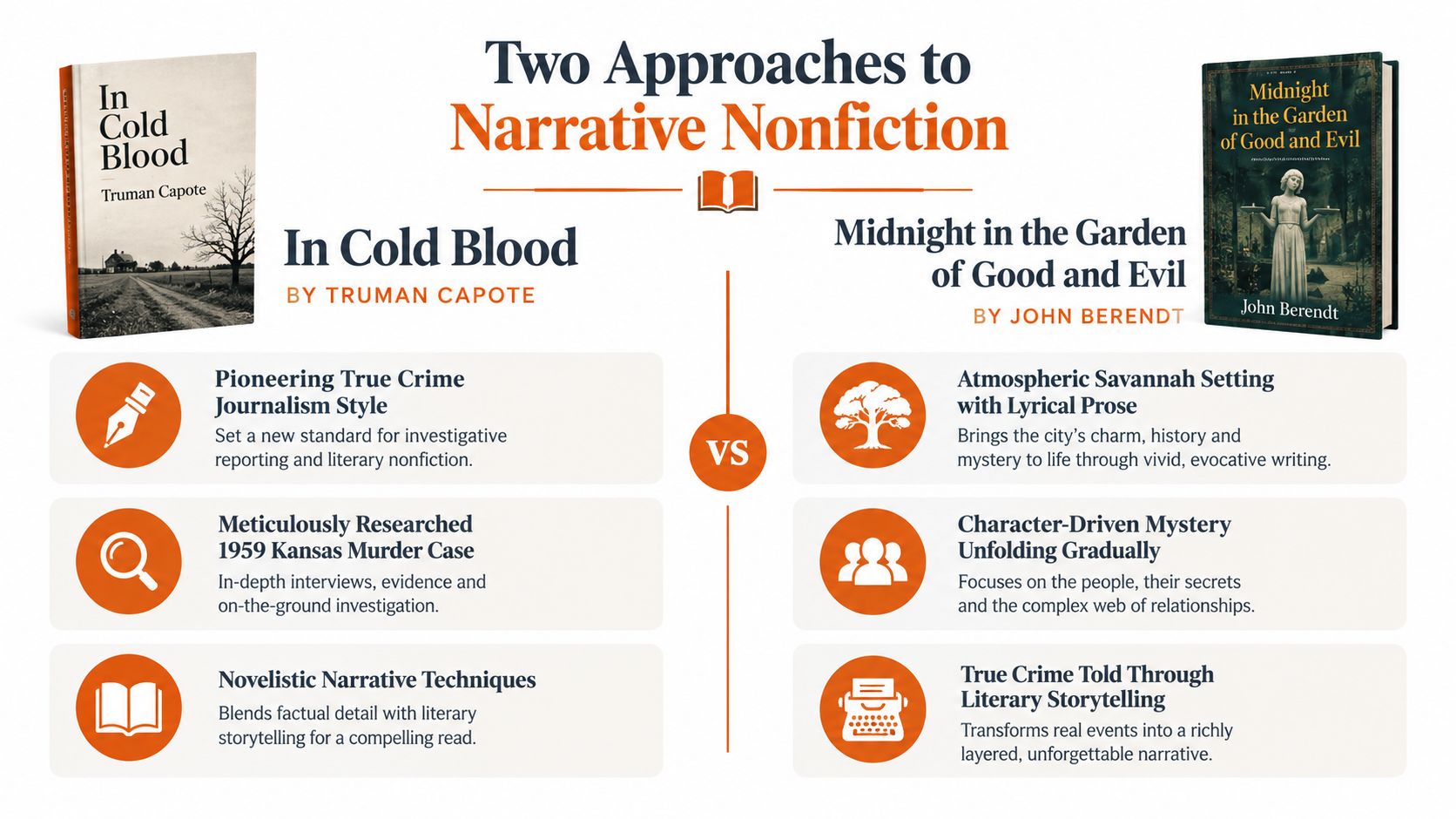
1. In Cold Blood by Truman Capote
Scene-building is the first narrative problem many nonfiction writers fail to solve. They have the facts, the interviews, and the timeline, but the page still feels flat. In Cold Blood matters because it shows how reported material can read with the pressure and clarity of a story.
Capote is often placed near the start of modern narrative nonfiction's development, as noted earlier in the article. What makes the book useful for writers is not its fame. It is the way Capote turns evidence into sequence. He does not rush to explain the crime or summarize its meaning. He places the reader inside rooms, routines, and ordinary moments, then lets tension gather through what people do, notice, and miss.
The problem it solves
A lot of drafts explain before they orient. The writer knows why an event matters, so the explanation arrives too soon. Readers, though, usually need a floor to stand on first. They need the setting, the people, and the immediate action.
Capote's method works like stage blocking in a play. Before the conflict peaks, you know who is present, where they are, and what physical reality surrounds them. That groundwork makes later information easier to absorb. If you write profiles, reported essays, case studies, or even brand origin stories, that pattern is useful because it keeps exposition from smothering momentum.
Point of view also matters here. Although the book is nonfiction, the prose often stays close to what a given person could plausibly observe in a moment. Writers studying scene control can pair that lesson with a practical guide to third-person narrative examples and point-of-view choices.
Craft lesson: Put the reader in the room before you tell the reader what the room means.
Try that on a small scale:
- Choose one documented moment: a meeting, interview, discovery, or decision
- Anchor the scene physically: who is there, what they are doing, what can be seen or heard
- Hold back the interpretation: wait a beat before explaining significance
Craft lesson to test in your own work: draft one factual scene that opens with action and setting, then move the background information to the second paragraph. That single change often makes nonfiction feel lived, not merely reported.
2. Educated by Tara Westover
Memoir earns its power when a reader can feel a mind changing on the page. Educated shows how to do that.
In this article's larger pattern, this book fits the narrative problem of memoir transformation. Westover is not recounting hard experiences from childhood and early adulthood. She is showing how a person revises her own understanding of family, knowledge, authority, and selfhood over time. That difference matters. A memoir can report events accurately and still feel flat if the narrator's inner change arrives as a summary instead of a process.
Westover's method works like watching a photograph come into focus in a darkroom. The image is there early, but its meaning sharpens gradually. A scene from childhood may first read as normal, then troubling, then decisive once later knowledge reaches it. Reflection does real work because it changes the value of what came before.
That is the craft lesson many writers miss.
A weaker personal essay says, in effect, I went through this and it changed me. Educated handles transformation in smaller turns. The narrator holds one belief. Experience strains it. New language makes that strain visible. Only then does insight arrive. The result feels earned because the reader has watched the old framework crack before the new one appears.
If you write an origin story, a teaching essay, or a founder memoir, that sequence is useful. Readers trust change more when they can see the earlier logic that made the old belief feel reasonable at the time.
Try reading the book with three questions in mind:
- What did the narrator once accept as normal?
- What event, conversation, or contradiction weakened that belief?
- What later reflection changes the meaning of the earlier scene?
Those questions can guide revision, too. If you draft a personal story and the lesson sounds finished from the first paragraph, the piece may be skipping the most interesting part. The reader needs to encounter the friction, not just the conclusion.
If you revise with a tool like RewriteBar, this is a good place to test tone shifts. Memoir often moves among scene, explanation, and hindsight, and those modes can blur if the voice is not controlled.
Craft lesson to test in your own work: choose one memory and write it twice. First, write the scene only as your past self understood it. Then add a short paragraph of present-day reflection that changes the reader's interpretation of that same moment.
3. The Immortal Life of Henrietta Lacks by Rebecca Skloot
Explanatory nonfiction often loses readers at the same point. The writer starts teaching before the reader has a reason to care. The Immortal Life of Henrietta Lacks solves that problem by attaching difficult medical history to a family, a body, and a long chain of consequences.
Skloot is doing several jobs at once. She reports on cell biology, traces the history of medical consent, and follows the Lacks family as they try to understand what was taken from Henrietta and what was built from her cells. Because those threads stay connected, the science never feels like a classroom detour. It feels like part of the conflict.

A useful way to read this book is to watch how information arrives. Skloot rarely drops a dense concept onto the page in isolation. She sets up a human question first. Someone is confused, harmed, excluded, or searching for an answer. Then the explanation enters. The structure works like a teacher answering a raised hand instead of reciting a glossary.
That pattern matters for any writer handling hard material. If you explain a product, a process, a policy, or a scientific idea, readers need context before terminology. The term should solve a small mystery the scene has already created.
Here are three moves worth noticing:
- Start with a stake, not a definition. Let the reader see what is at risk before naming the concept.
- Use people as reference points. Information becomes clearer when readers can track who knows what, who does not, and why that gap matters.
- Break explanation into intervals. Short bursts of teaching, placed between scenes, are easier to follow than one large block.
Craft lesson to test in your own work: take a paragraph that explains a complex idea, then rewrite the opening sentence so it begins with a person facing a problem that the explanation will clarify.
4. Shoe Dog by Phil Knight
A business story becomes readable the moment the company stops acting like a chart and starts acting like a cast.
That is the narrative problem Shoe Dog solves. In the larger map of narrative nonfiction, this book belongs under business storytelling. Phil Knight does not present Nike as a neat sequence of smart moves. He presents it as a string of strained conversations, risky bets, cash problems, and changing loyalties. The result feels less like a case study and more like a road story with invoices attached.
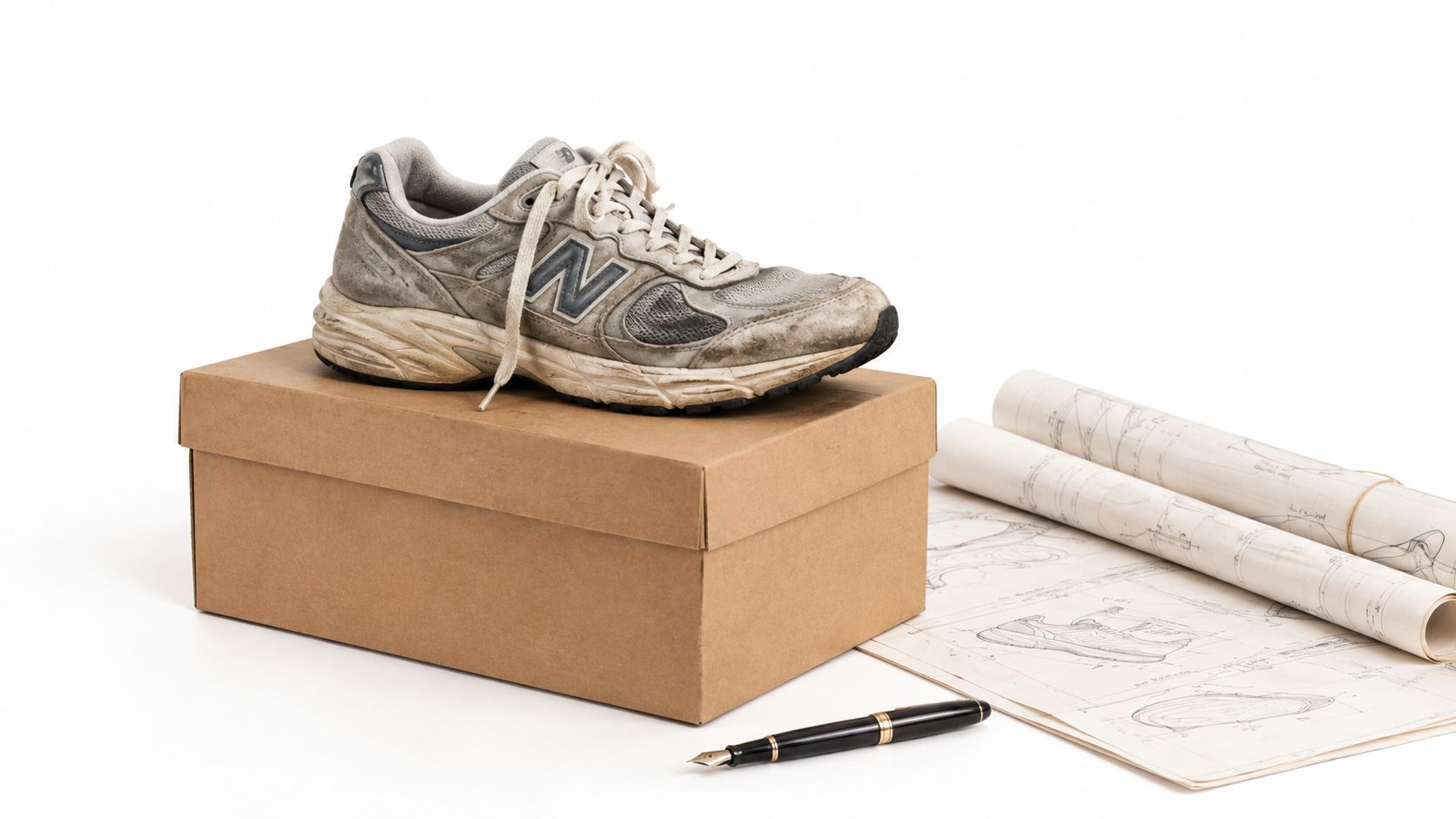
That distinction matters because business writing often gets flattened by hindsight. Once the company succeeds, the writer is tempted to explain every decision as if the logic were obvious all along. Knight leaves more uncertainty on the page. Readers see choices before they see outcomes. That is what creates momentum.
A useful way to study this book is to track what carries each scene forward. Usually, it is not a concept like growth or branding. It is a practical pressure point. Money is short. A shipment is delayed. A partner is hard to read. A bank relationship is unstable. Strategy stays clear because it is tied to immediate trouble.
This structure works like teaching math through a word problem instead of a formula sheet. The abstract idea becomes easier to follow because a concrete problem arrives first. If you write founder stories, company histories, or client narratives, that is a helpful model. A reader can follow a balance-sheet problem more easily when one person has to make a decision under time pressure.
If you want a related framework for applying story in commercial writing, this guide to storytelling in business gives a practical bridge.
Three craft choices are especially useful here. Knight lets business jargon stay in the background unless the reader needs it. He gives scenes a human center, often a conversation or conflict. He also treats decisions as plot points. That last move is easy to miss, but it matters. A sentence like "we expanded into a new market" reports an outcome. A sentence like "we had to choose between protecting cash and taking the distributor deal" creates narrative tension.
Craft lesson to test in your own work: take one paragraph about a company milestone and rewrite it around the moment of choice. Name the pressure, the options, and the cost of getting it wrong.
5. The Big Short by Michael Lewis
Some books solve the problem of invisible systems. Financial instruments aren't naturally scenic. They don't give you weather, rooms, or obvious physical action. The Big Short makes them narratable anyway.
Lewis explains a crisis by attaching difficult material to distinct people who notice patterns others ignore. That's a durable nonfiction technique. Instead of teaching the whole system first, he gives readers interpreters inside the system.

The problem it solves
Abstract subjects often overwhelm the page because the writer tries to explain everything at once. Lewis narrows focus. He uses character as a delivery system for complexity. That keeps the reader oriented while the concepts grow harder.
This is especially useful if you write about software, policy, finance, or operations. Start with the person who noticed the flaw, contradiction, or anomaly. Let that perception guide the explanation.
Later, when you need a wider view, you can expand. But readers are less likely to quit when they already trust the narrative path.
A short visual summary can help after the first explanatory run:
<iframe width="100%" style="aspect-ratio: 16 / 9;" src="https://www.youtube.com/embed/D4g6squbdpY" frameborder="0" allow="autoplay; encrypted-media" allowfullscreen></iframe>Working test: If your reader can't name the person carrying the explanation, your “complex topic” section probably needs a stronger human anchor.
Craft lesson to test: identify one system-heavy section in your draft and rewrite the opening around a person who first saw the problem clearly.
6. Midnight in the Garden of Good and Evil by John Berendt
Some nonfiction books teach setting the way a good host teaches a city. They do not hand you a map first. They walk you into a room, let you hear how people speak, and show you who holds power before they explain anything else. Midnight in the Garden of Good and Evil is a strong example of that method.
Berendt solves the atmosphere problem. Many drafts about place describe buildings, weather, and local color, but the place still feels flat. His book makes Savannah feel alive because the city arrives through performance, gossip, manners, and status. Setting works like weather in a scene. You may not always stare at it, but it changes how everyone moves.
The problem it solves
Place-based nonfiction often treats setting as wallpaper. Berendt treats it as pressure. The city influences who gets believed, who gets watched, who gets invited in, and who stays outside the circle.
That distinction matters if you write travel pieces, cultural reporting, campus stories, or local business profiles. Readers usually do not need a longer description of the street. They need to understand the rules of the street.
A useful way to study this book is to separate details into three jobs:
- Social detail: Who belongs, who performs belonging, and who decides the difference.
- Behavioral detail: Rituals, habits, and codes that repeat until they feel normal.
- Selective visual detail: A few images that support the mood and social order.
This is why the book feels thick with atmosphere without collapsing into decorative prose. The details are doing narrative work. They are not only helping you see the place. They are helping you read the people inside it.
Craft lesson to test: take one setting paragraph from your draft and revise it so at least half the details reveal a local rule, ritual, or status signal, not just the look of the place.
7. Sapiens by Yuval Noah Harari
Big-history nonfiction often fails for a simple reason. It has facts, but no engine.
Sapiens matters here because it solves a different narrative problem than the books around it. Harari is not trying to immerse you in one town, one trial, or one company. He has to carry the reader across centuries and still create forward motion. The book works like a long chain of cause and effect. One shift leads to another, and each shift changes how people live, cooperate, fight, or believe.
That is the craft lesson worth studying.
Writers who handle broad subjects often slide into topic stacking. They mention agriculture, religion, trade, empire, money, science, and institutions in quick succession. The reader gets coverage, but not shape. Harari keeps shape by building around movement. What changed first? What did that change allow next? Why did the result matter in ordinary human terms?
You can use that move in historical explainers, research-driven essays, and thought leadership pieces that need to simplify a large subject without flattening it. The goal is not to copy Harari's scale or certainty. The goal is to give the reader a path.
A practical way to study the book is to watch how it handles abstraction:
Start with a pressure point. Name the human problem or shift at stake, not just the era.
Turn ideas into sequence. Put developments in an order the reader can follow.
Translate consequence. Show what the change did to behavior, power, work, or belief.
That sequence matters because abstraction becomes readable when it behaves like plot. The reader does not need every detail at once. The reader needs to feel why section B grows out of section A.
Craft lesson to test: take one broad section of your draft and rewrite it as a three-step chain of change, then add one sentence after each step that explains the lived consequence.
8. The Right Stuff by Tom Wolfe
Some nonfiction solves a voice problem, not an information problem. The Right Stuff shows how a writer can cover highly technical work and still make the page feel fast, tense, and human.
Wolfe is often discussed as a central figure in New Journalism because he brought scene, status, rhythm, and social observation into reported prose. The National Endowment for the Humanities offers a useful overview of that approach in its discussion of Tom Wolfe and the origins of New Journalism. That context helps explain why this book still matters to writers. It turns test pilots, engineers, and aerospace culture into a story about competition, nerve, and identity.
The problem it solves: distinctive voice in technical material
Technical subjects often break down in one of two ways. The writer either strips out too much personality and the prose goes dull, or adds excitement in a way that feels forced. Wolfe's example is more useful than either extreme. He keeps the machinery, procedures, and institutional detail, but he filters them through attitude, pacing, and social pressure.
That combination matters because readers rarely care about information in the abstract. They care about what the information means inside a contest, a risk, or a pecking order. In The Right Stuff, expertise is never just expertise. It is tied to reputation, masculinity, danger, and public image.
A simple way to study the book is to watch how voice changes the job of explanation. Instead of pausing the story for a lesson, Wolfe lets description carry judgment and momentum at the same time. The result feels less like a manual and more like being inside a charged room where every detail signals who belongs.
For writers, that leads to three usable questions:
Where is the pressure? Technical detail gets clearer when the reader knows what could go wrong.
Who gains status here? Hierarchy makes explanation easier to follow because it gives the facts social meaning.
What should the sentence feel like? A high-pressure moment usually needs tighter rhythm than a background paragraph.
You do not need to imitate Wolfe's surface style, and copying his mannerisms often backfires. The practical lesson is narrower. Attach information to stakes, let action reveal rank, and revise sentence rhythm so the prose matches the level of strain in the scene.
Craft lesson to test: take one explanatory paragraph in your draft and revise it around a live pressure point. Keep the facts, cut one abstract sentence, add one cue about status or risk, and shorten the sentence where the tension peaks.
9. I Know Why the Caged Bird Sings by Maya Angelou
Some nonfiction books teach plot. This one teaches voice.
In a list organized by narrative problems, Maya Angelou belongs under distinctive voice and memoir transformation. I Know Why the Caged Bird Sings shows how a writer can turn painful experience into shaped narrative without sanding off its complexity. The result feels personal, but it also feels made. That balance matters.
A useful way to read the book is to separate two jobs that many memoir drafts blur together. Scene gives the reader something to witness. Voice gives the reader a mind to travel with. Angelou keeps both alive at once. Her language is controlled, musical, and exact, yet the writing stays readable.
That combination is harder than it looks. Many memoirists summarize hurt in abstract language, or they press so hard on the emotion that the prose starts announcing feelings instead of carrying them. Angelou uses rhythm, image, and selective reflection to create force. If you want to study how repeated phrasing can build emphasis without sounding repetitive, this guide to anaphora in poems and prose is a helpful companion.
Here is the practical distinction to watch for as you read:
A weaker memoir paragraph often says what the experience meant before the reader has felt the experience.
Angelou usually earns reflection after the scene has created pressure, vulnerability, or contrast. That ordering matters. It works like letting a photograph develop before writing the caption.
Try reading one passage with a pencil and mark three things:
- one concrete image
- one sentence where rhythm slows or tightens
- one moment of reflection that changes your understanding of the scene
That small exercise shows how voice is built from choices on the page, not from personality alone.
Craft lesson to test: revise one personal passage in two steps. First, cut one abstract sentence that explains the feeling. Next, replace it with a concrete image, a remembered phrase, or a sentence with stronger cadence. Then check whether the reflection lands better after the scene does its work.
10. The New New Thing by Michael Lewis
Business and tech subjects do not become narrative just because the stakes are high. They become narrative when a writer finds the human engine inside the change. The New New Thing earns its place on this list because it solves a specific problem: how to write about innovation without turning the page into either a product demo or a personality profile.
Lewis builds the book around Jim Clark, but the subject is larger. He uses one forceful, restless figure as a way to explain an era, a market mood, and a set of beliefs about the future. That choice matters. A reader can follow a person through uncertainty more easily than a stack of industry explanations.
Here is the craft move to watch: the technology usually arrives attached to desire, argument, risk, or ego. The explanation is threaded into action. It works like learning the rules of a sport while the game is already in progress. You understand the system because someone wants something badly enough to make the system matter.
That is especially useful for writers handling startup stories, company histories, founder memoirs, or reported pieces about emerging tools. A weaker draft often isolates the explanation in one block and the drama in another. Lewis keeps them connected, so the reader learns what the technology does at the same time they learn why this person is betting on it.
If you want to borrow one method, try this sequence in a draft: Start with the bet. Then show the pressure on that bet. Then explain the technology only as far as the reader needs in order to understand the decision.
That structure will not give you Lewis's voice, and it will not turn every technical subject into a character-driven story. It can, however, help you avoid a common problem: explanation that sits still while the story is supposed to move.
Craft lesson to test: take one explanatory passage about a product, system, or market shift and rewrite the opening around a person's high-risk decision. After that, keep only the technical detail that clarifies what the person is trying to do, what could fail, and why the moment matters.
10 Narrative Nonfiction Books Compared
| Title | Complexity 🔄 | Resource Requirements ⚡ | Expected Outcomes 📊 | Ideal Use Cases 💡 | Key Advantages ⭐ |
|---|---|---|---|---|---|
| In Cold Blood (Truman Capote) | High, deep investigative reporting and multi-perspective narrative | High, extensive interviews, archival research, long production time | High, emotionally engaging, suspenseful nonfiction that builds credibility | Long-form features, turning factual investigations into literary storytelling | Masterful scene-setting and suspense; blends journalism with novelistic craft |
| Educated (Tara Westover) | Moderate, first-person reflective with chronological and thematic edits | Moderate, personal reflection, verification, careful editing | High, relatable arc that appeals broadly and clarifies complex family dynamics | Memoir, personal-brand narratives, educational transformation stories | Accessible, conversational prose that balances vulnerability and analysis |
| The Immortal Life of Henrietta Lacks (Rebecca Skloot) | High, parallel narratives and ethical/scientific translation | High, scientific research, family interviews, rigorous fact-checking | High, clear explanation of technical topics paired with human story | Explaining science/technical topics to general audiences; case studies | Excellent at translating specialized knowledge without oversimplifying |
| Shoe Dog (Phil Knight) | Moderate, chronological business memoir with personal anecdotes | Moderate, insider access, company records, narrative crafting | High, compelling founder story that conveys strategy and lessons | Founder origin stories, entrepreneur branding, business storytelling | Blends business strategy with emotional honesty and readable prose |
| The Big Short (Michael Lewis) | High, multiple perspectives and complex financial exposition | High, specialized research and domain expertise required | High, demystifies complex systems through vivid character-driven examples | Explaining abstract/technical systems (finance, tech) via narrative cases | Strong model for clarifying complicated concepts while keeping readers engaged |
| Midnight in the Garden of Good and Evil (John Berendt) | Moderate–High, atmospheric prose with complex cast and slow revelations | High, extensive interviews, local research, literary refinement | High, vivid sense of place and suspenseful nonfiction narrative | Place-driven nonfiction, literary true crime, character-rich reporting | Exceptional prose and sustained narrative momentum within factual limits |
| Sapiens (Yuval Noah Harari) | High, synthesizing multidisciplinary research into coherent narrative | High, broad scholarship, careful synthesis across fields | High, accessible big-picture synthesis useful to wide audiences | Educational overviews, translating academic research for general readers | Organizes vast, complex material into digestible, engaging narrative |
| The Right Stuff (Tom Wolfe) | High, scene-based immersive narrative with technical detail and voice | High, technical research, interviews, distinctive stylistic craft | High, energetic portrayal of technical achievement and personalities | Narratives about innovation, pioneers, and technical culture | Distinctive voice that enlivens technical subjects while retaining clarity |
| I Know Why the Caged Bird Sings (Maya Angelou) | Moderate, lyrical memoir blending poetry and concrete scenes | Moderate, introspection, careful poetic and narrative craft | High, powerful voice with emotional and literary resonance | Personal narratives on identity, resilience, and voice development | Combines accessible clarity with poetic depth and universal resonance |
| The New New Thing (Michael Lewis) | Moderate, profile-driven tech/business narrative focused on personality | Moderate, interviews, era-specific tech/business research | Moderate–High, engaging portrait of tech-era entrepreneurship | Tech/business storytelling, startup culture profiles, innovation narratives | Clear translation of business/tech concepts via compelling character study |
Turn Reading Notes Into Writing Practice
The best way to use these examples of narrative nonfiction isn't to admire them from a distance. Use them as problem-solvers. Pick the problem your draft has. Maybe your opening lacks a scene. Maybe your explanation is accurate but heavy. Maybe your memoir has events, but not yet a felt transformation. Once you name the problem, the reading becomes much more useful.
Then isolate the passage where a book handles that problem well. Don't just underline lines you like. Describe the move in plain language. “This scene delays background.” “This chapter explains science through a family conflict.” “This writer creates place through social behavior, not description alone.” That step matters because craft becomes reusable only when you can explain it clearly.
A small workflow helps:
- Choose one narrative problem: Scene, atmosphere, synthesis, voice, technical clarity, or reflection.
- Mark one passage that solves it: Keep the sample short enough to study line by line.
- Describe the technique plainly: Avoid vague praise like “powerful” or “beautiful.”
- Test a small version in your own draft: One paragraph is enough for a first attempt.
This approach also keeps you from copying surface style. You're not trying to sound like Truman Capote, Maya Angelou, or Tom Wolfe. You're trying to understand what each writer is doing with information, sequence, and attention. That's a more durable skill.
One caution matters. Narrative nonfiction depends on factual accuracy and ethical handling. A vivid scene isn't a license to overclaim. A strong voice isn't permission to blur uncertainty. The genre's power comes from combining documentation with design, not from replacing one with the other.
A useful revision habit is to compare versions side by side. Keep one draft focused on clarity and another on rhythm, tension, or reflection. If you move often between explanatory, reflective, and narrative prose, a reusable workflow in RewriteBar may help you test those shifts without rewriting everything from scratch. It can be especially handy when you want to simplify jargon, tighten transitions, or compare edits while keeping your original passage visible.
If you get stuck before revision, it may help to review a few proven strategies to write freely. Then come back to the passage with a narrower goal. Don't “write like a narrative nonfiction author.” Solve one concrete problem. That's how reading turns into method.
RewriteBar gives you a practical way to revise narrative nonfiction in the apps you already use. You can compare edits side by side, adjust tone and clarity, and run custom workflows that help with scene polish, explanatory passages, or reflective sections. If you want a lightweight editing companion for this kind of work, visit RewriteBar.

More to read
8 Anaphora Poem Examples to Inspire Your Writing
Explore 8 powerful anaphora poem examples from MLK to Maya Angelou. Learn how this rhetorical device creates rhythm and impact, with tips for your own writing.
Newsletter Writing That Actually Gets Read
Master newsletter writing with practical steps for subject lines, body structure, editing, and measurement. Built for marketers, founders, and creators.
Storytelling in Business: Frameworks, Examples, and Impact
Learn how storytelling in business drives trust and conversion, with proven frameworks, real examples, and templates you can use today.
Tags
Written by
Mathias MichelPublished
September 19, 2026