Discover Top Good Writing Prompts to Ignite Your Creativity
Explore 8 inspiring good writing prompts across genres. Fuel your creativity and improve your writing skills with these engaging story starters.
Written by
 Mathias Michel
Spark Your Imagination: A Collection of Diverse Prompts
Good writing prompts are essential for overcoming writer's block and sparking creativity. This list provides diverse prompts designed to jumpstart your writing, whether you're crafting compelling content, developing characters, or exploring new genres. Discover the power of good writing prompts with these unique starting points, covering personal narratives, photo-inspired stories, speculative scenarios, character encounters, first-line generators, genre mashups, constraint-based exercises, and emotional challenges.
1. Personal Narrative Prompt: 'A Time You Overcame Fear'
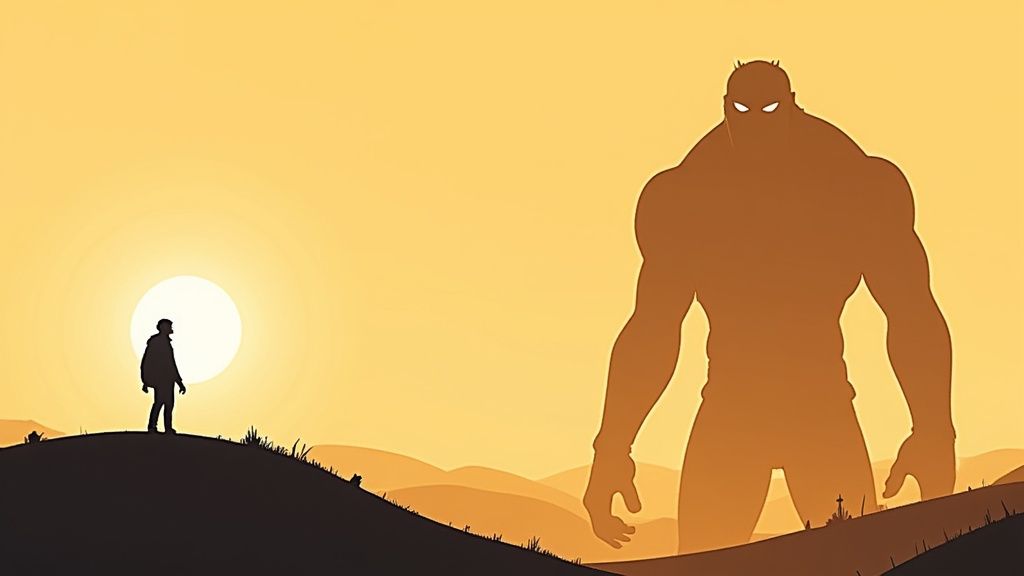
This good writing prompt, focusing on a time you overcame fear, invites writers to delve into a personal experience where they confronted and triumphed over a significant fear. It's a powerful exercise in self-reflection, encouraging vulnerability and exploring the nuances of emotional growth and character development. By recounting the specific details of the experience, writers not only process their emotions but also craft a compelling narrative that resonates with universal themes of courage and resilience. This prompt works by prompting writers to recall the sensory details, internal thoughts, and external actions associated with the experience, ultimately leading to a deeper understanding of themselves and the impact of the event.
This prompt deserves a spot on any list of good writing prompts because of its versatility and impact. It balances universal themes with unique personal experiences, allowing writers of all backgrounds to connect with the core idea while exploring their individual stories. It’s particularly beneficial for developing emotional intelligence and self-awareness, essential skills for effective communication in any field, from software development to content marketing. This prompt can be adapted for both fiction and creative non-fiction, making it an accessible entry point for new writers while also providing a rich source of inspiration for experienced authors.
One of the key features of this prompt is its focus on authenticity. It encourages writers to embrace their own voice and perspective, leading to genuine and compelling narratives. The inherent narrative arc (before, during, and after the event) provides a natural structure, making the writing process more manageable. Examples of successful implementation range from Joan Didion's deeply personal essay 'On Self-Respect,' which explores her fears of inadequacy, to Stephen King's memoir 'On Writing,' which details his journey of overcoming the fear of failure. Countless college admission essays also utilize this prompt to showcase personal growth and resilience. Learn more about Personal Narrative Prompt: 'A Time You Overcame Fear'
Pros:
- Highly relatable for readers of all backgrounds.
- Helps writers develop emotional intelligence and self-awareness.
- Natural structure built around narrative arc (before, during, after).
- Accessible entry point for new writers.
Cons:
- May be difficult for those uncomfortable with personal disclosure.
- Can lead to clichéd responses without proper guidance.
- Requires emotional processing that some writers may find challenging.
Tips for using this good writing prompt effectively:
- Focus on a specific moment: Instead of writing about a general fear, choose a specific instance when you confronted that fear. This will make your narrative more compelling and easier to structure.
- Include sensory details: Bring the scene alive by describing what you saw, heard, smelled, tasted, and touched. This will immerse the reader in your experience.
- Show both internal thoughts and external actions: Describe not only what happened but also what you were thinking and feeling at the time. This creates a deeper connection with the reader.
- Balance vulnerability with reflection: Be honest about your emotions, but also reflect on what you learned from the experience.
- Consider how the experience changed your perspective: Did overcoming this fear change the way you see the world or yourself?
This prompt is ideal for anyone looking to explore personal growth, develop their writing skills, or simply connect with their own emotions on a deeper level. Whether you’re a student crafting a college essay, a content creator searching for authentic stories, or a software developer looking to improve communication skills, the "overcoming fear" prompt can be a powerful tool for self-discovery and creative expression.
2. Photo-Inspired Writing Prompt: 'The Story Behind the Image'
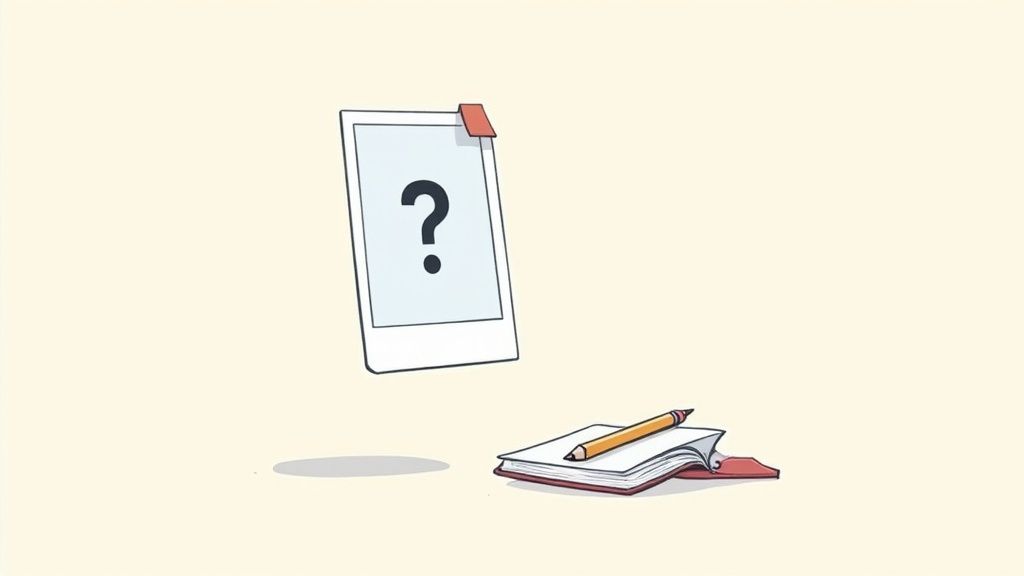
This good writing prompt leverages the power of visuals to ignite creativity. It presents writers with a compelling photograph and challenges them to craft a narrative that explains the circumstances surrounding the captured moment. This could involve exploring the events leading up to the photo, what's happening during the depicted scene, or the aftermath. This approach effectively bridges visual and written storytelling, encouraging writers to interpret the image and build context around it. It's a versatile exercise that works for various forms of writing, from fiction and poetry to creative non-fiction. It provides a concrete starting point, which can be incredibly helpful for overcoming writer's block, and allows writers to flex their descriptive writing muscles and imaginative thinking simultaneously.
This method earns its place on the list of good writing prompts due to its accessibility and adaptability. Whether you're a seasoned novelist or just beginning to explore the craft of writing, a photo prompt offers a tangible entry point. It builds valuable observational skills and encourages close attention to detail, strengthening a writer's ability to convey vivid imagery. The prompt is also highly customizable; the chosen image dictates the tone, genre, and complexity of the resulting narrative. For example, a historical photograph can inspire a piece blending fact and fiction, while a portrait might prompt character-driven storytelling.
Features and Benefits:
- Visual stimulus: The photograph acts as a springboard for immediate creative thinking.
- Genre versatility: Suitable for fiction, poetry, creative non-fiction, and more.
- Reduces writer's block: The concrete visual provides a clear starting point.
- Develops descriptive writing: Encourages detailed and evocative language.
- Enhances imagination: Prompts writers to invent context and backstory.
Pros:
- Accessible for all levels: Beginners and experienced writers can benefit.
- Builds observation skills: Sharpens attention to detail and visual analysis.
- Highly customizable: Image selection allows for tailored prompts.
- Incorporates historical/cultural elements: Image choice can enrich the narrative.
Cons:
- Potential over-constraint: An overly specific image might limit creativity.
- Image-dependent quality: A weak image leads to a weak prompt.
- Descriptive overload: Writers might prioritize description over plot/character.
Examples of Successful Implementation:
- The New York Times' "What's Going On in This Picture?" weekly feature presents readers with a captivating photograph and encourages them to decipher the story within.
- National Geographic's "Your Shot" storytelling assignments often incorporate photo prompts, asking photographers to share the narratives behind their powerful images.
- Joe Bunting's "The Write Practice" regularly uses photo prompts to inspire creative writing exercises.
Actionable Tips:
- Choose ambiguous images: Select photos that leave room for interpretation and multiple narratives.
- Guiding questions: Ask specific questions about the image (Who are these people? What are they feeling? What just happened? What will happen next?).
- Historical photographs: Use historical images to blend factual elements with fictional storytelling.
- Perspective shift: Try writing from the perspective of someone within the image.
- Timed writing: Use the image as a starting point for timed writing exercises to jumpstart creativity.
Popularized By:
- The New Yorker's photo contests have long used images as creative prompts.
- Pinterest writing prompt boards often feature collections of inspiring photographs.
- Educational resource sites like ReadWriteThink utilize photo prompts to engage students in creative writing.
3. Speculative Scenario Prompt: 'What If?'
One of the most potent good writing prompts is the "What If?" speculative scenario. This thought-provoking approach encourages writers to explore alternative realities and challenge assumptions about the world around us. By posing a hypothetical scenario, you open a doorway to creative problem-solving, world-building, and a deep consideration of cause-and-effect relationships. These prompts are particularly effective because they spark curiosity and offer endless possibilities. It asks you to fundamentally alter a facet of reality and then explore the rippling consequences. This makes it a versatile tool for crafting everything from flash fiction to epic novels.

This prompt typically begins with a clear, concise premise phrased as a question. Consider these examples: "What if humans could fly?" or "What if electricity disappeared?" The "What If?" prompt encourages both logical thinking and imaginative exploration. While the initial premise might be fantastical, the exploration of its consequences requires a degree of logical reasoning. How would society adapt? What technologies would emerge or become obsolete? What philosophical dilemmas would arise? These are just a few of the avenues a writer can explore. The beauty of this good writing prompt is its scalability; a simple "What If?" can be the seed for a short story, a complex novel, or even a multimedia franchise.
Successful implementations of this prompt abound in literature and popular culture. Philip K. Dick's The Man in the High Castle explores a world where the Axis powers won World War II. Ted Chiang's Story of Your Life delves into the implications of perceiving one's future in its entirety. Andy Weir's The Martian grapples with the practicalities and psychological challenges of an astronaut stranded on Mars. These examples showcase the diverse possibilities inherent in speculative scenarios, spanning alternate history, philosophical science fiction, and hard sci-fi survival stories. Learn more about Speculative Scenario Prompt: 'What If?'
To effectively utilize the "What If?" prompt, consider these tips:
- Start with the premise: Clearly define the altered aspect of reality.
- Focus on human consequences: How do individuals and society react to the change?
- Establish clear rules: Even in a fantastical scenario, internal consistency is key.
- Ground fantastical elements in realistic human reactions: This makes the story relatable and believable.
- Consider both immediate and long-term implications: How does the change impact the world on a small and large scale?
- Use the "if this, then what?" technique: This helps you explore the chain of consequences that flow from your premise.
This prompt excels in science fiction, fantasy, and alternative history genres. It's a powerful tool for developing critical thinking and logical reasoning skills, appealing to both creative and analytical minds. The inherent conflict created by the altered reality provides a strong foundation for compelling storytelling.
While powerful, the "What If?" prompt has some potential downsides. It can become overwhelming without clearly defined parameters. Extensive research or world-building might be necessary to ensure a convincing portrayal of the alternative reality. There’s also a risk of becoming so engrossed in the concept that character development suffers.
The “What If?” technique owes its popularity to a range of influences, including science fiction authors like Ursula K. Le Guin and Isaac Asimov, writing instructors like Orson Scott Card (author of How to Write Science Fiction & Fantasy), online communities like Reddit's r/WritingPrompts, and thought-provoking television series like Black Mirror. This wide range of influence reinforces the power and versatility of this simple, yet profoundly impactful, writing tool.
4. Character-Driven Prompt: 'The Unexpected Encounter'
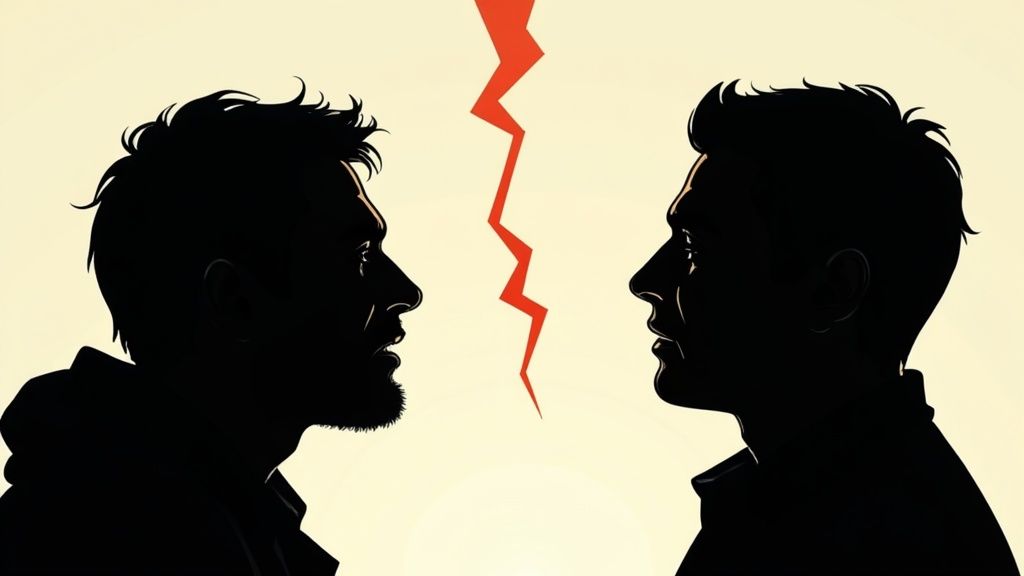
This good writing prompt, "The Unexpected Encounter," focuses on crafting compelling narratives by placing distinct characters with conflicting goals, backgrounds, or worldviews into direct interaction. Instead of relying on intricate plot mechanics, this approach prioritizes character development through dialogue, evolving relationships, and the natural tension arising from opposing viewpoints. It's a powerful technique for generating stories organically from the complexities of human interaction.
This prompt type earns its place on the list of good writing prompts because it offers a versatile framework applicable across genres, from literary fiction to screenwriting. It forces writers to delve into the nuances of character, exploring motivations, biases, and vulnerabilities. The resulting stories are often rich in subtext and emotional depth. Features include placing characters with different motivations in direct interaction, forcing dialogue that reveals character, creating natural tension, and prioritizing relationships as the engine of the story. These features combine to organically generate compelling narrative.
Consider the successful implementation of this prompt in Raymond Carver’s short story "Cathedral," where the encounter between a sighted man and a blind man reveals profound insights about perception and connection. Similarly, Zadie Smith masterfully uses intersecting character encounters in "White Teeth" to explore themes of identity and cultural clash. Even simple creative writing exercises, like the classic "character in an elevator" scenario, demonstrate the power of this prompt.
Tips for using the "Unexpected Encounter" prompt:
- Define Opposing Wants: Before the characters meet, clearly define their individual goals and desires. What are they hoping to achieve? How might these desires clash?
- Consider Power Dynamics: Is there an imbalance of power between the characters? How does this influence their interaction?
- Strategic Setting: Use the setting to enhance the tension or create unexpected connections. A crowded market, a desolate wilderness, or a confined elevator can all dramatically shape the encounter.
- Embrace Surprise: Allow your characters to act in ways that even surprise you. This can lead to more authentic and compelling interactions.
- Show, Don't Just Tell: Pay attention to subtle body language, subtext, and unspoken communication alongside the dialogue.
Pros:
- Develops authentic dialogue-writing skills.
- Naturally generates conflict and story momentum.
- Focuses on character development through interaction.
- Applicable across various genres and settings.
Cons:
- Can become dialogue-heavy without sufficient action.
- Requires well-developed character backgrounds for maximum impact.
- May lead to predictable outcomes without added complexity.
This prompt draws inspiration from established storytelling principles, such as Robert McKee's focus on character-driven narratives in his book "Story." It also resonates with the improvisational "yes, and" approach, encouraging writers to build upon character interactions organically. Furthermore, the works of Flannery O'Connor, known for her complex and compelling characters, exemplify the power of this approach. Even popular writing challenges like NaNoWriMo often implicitly encourage the use of such character-driven prompts.
By using the “Unexpected Encounter” prompt, writers of all levels, from non-native English speakers and software developers to content creators and students, can hone their skills in character development, dialogue, and crafting compelling narratives. It provides a solid foundation for building stories that resonate with readers on an emotional level.
5. First Line Generator Prompt: 'Begin With This Sentence'
Overcoming the dreaded blank page is often the biggest hurdle for any writer, regardless of experience. This "First Line Generator Prompt" offers an effective and engaging solution, securing its place on this list of good writing prompts. It provides a pre-written opening sentence, acting as a springboard for your creativity and eliminating that initial paralysis. This method is particularly useful for generating ideas when you're feeling stuck or looking for fresh inspiration for your content creation, marketing copy, or even academic writing.
This prompt works by supplying you with a ready-made starting point. Instead of agonizing over the perfect opening, you're given a sentence designed to spark imagination. It instantly establishes a voice, hints at a conflict, or piques the reader's intrigue, providing immediate momentum and direction. The provided sentence acts as a foundation upon which you can build your narrative, explore characters, develop settings, and experiment with different genres. Think of it as receiving the first piece of a puzzle – your task is to discover where the remaining pieces fit.
The power of this prompt lies in its simplicity and versatility. It can suggest a genre, character, setting, or time period, all within a single sentence. Examples of iconic first lines showcasing this power include: 'It was a pleasure to burn.' (Ray Bradbury's Fahrenheit 451), which immediately sets a dystopian tone; 'Mrs. Dalloway said she would buy the flowers herself.' (Virginia Woolf), offering a glimpse into a character's seemingly ordinary yet significant day; and 'The man in black fled across the desert, and the gunslinger followed.' (Stephen King), which establishes a classic Western chase scenario. Even prompts like 'The door opened to reveal...' which are common in many creative writing courses, provide a starting point rife with possibility.
Features and Benefits:
- Provides immediate momentum to overcome writer's block: This is invaluable for non-native English speakers, software developers writing documentation, and anyone struggling to begin.
- Sets tone, point of view, and potential conflict: This helps content creators and marketers craft compelling narratives.
- Can suggest genre, character, setting, or time period: A boon for students and academics exploring different writing styles.
- Allows for infinite variations and adaptations: Ideal for indie founders and entrepreneurs developing unique brand stories.
Pros:
- Extremely effective for overcoming blank page anxiety.
- Creates immediate focus and direction.
- Easily modified for different skill levels or genres.
- Perfect for timed writing exercises or writing sprints, helpful for improving writing speed and fluency.
Cons:
- May feel constraining for some writers who prefer complete creative freedom.
- Can lead to forced narratives if the given line doesn't resonate personally.
- Writers may struggle to maintain the established voice or tone throughout the piece.
Tips for Utilizing First Line Prompts:
- Don't overthink: Follow where the first line naturally leads you. Don’t be afraid to experiment.
- Let the sentence suggest character, conflict, or setting elements: Allow the initial sentence to inform the development of your story.
- Try writing multiple different directions from the same first line: Explore different interpretations and possibilities.
- Consider the implied questions the opening raises: What mysteries or conflicts are hinted at?
- Use a timer (10-15 minutes) to maintain momentum: This technique is particularly effective for writing sprints and helps you maintain focus.
Popularized By:
- Gotham Writers Workshop exercises
- Brian Kiteley's 3 A.M. Epiphany writing prompt collection
- WritingExercises.co.uk's first line generator (Unfortunately, a direct link to this resource isn't currently available, but searching for "WritingExercises.co.uk first line generator" should yield results.)
- The First Line literary journal (which provides a quarterly first line)
By providing a starting point and a framework for building a narrative, the "First Line Generator Prompt" offers an accessible and effective way to improve your writing and generate fresh, compelling content. It’s a valuable tool for anyone looking to strengthen their writing skills, whether you’re a seasoned novelist or just beginning to explore the world of creative writing. This method truly deserves a spot among the best writing prompts available.
6. Genre-Bending Prompt: 'Unexpected Mashup'
Looking for good writing prompts that truly push your creative boundaries? The "Unexpected Mashup" is a powerful technique that deserves its place on any list of good writing prompts because it fosters highly original work. This advanced prompt challenges you to blend elements from two or more seemingly disparate genres, resulting in fresh narratives that defy easy categorization. Think cowboys in space, or Regency romance with a zombie twist. It’s about creating unexpected juxtapositions that challenge both genre conventions and reader expectations.
This genre-bending approach works by forcing a reconciliation between contrasting storytelling traditions. Imagine combining the gritty realism of a Western with the fantastical elements of Science Fiction, or the emotional core of Romance with the chilling suspense of Horror. The inherent conflict between these genres sparks unique narrative possibilities. For instance, how would a gunslinger’s code of honor translate to a laser-slinging future, or how would a budding romance blossom in the face of a zombie apocalypse?
Successful implementations of this prompt abound. Pride and Prejudice and Zombies brilliantly mashes Regency romance with zombie horror, while Firefly/Serenity blends the Western with Space Opera. Tamsyn Muir's Gideon the Ninth takes it even further, weaving together gothic fantasy, science fiction, and mystery. Even in established media like television, we see examples like True Detective Season 1, which blends a police procedural with cosmic horror. These examples highlight the potential of genre-bending to captivate audiences with its innovative storytelling.
Actionable Tips for Genre-Bending:
- Identify Core Elements: Define the key characteristics of each genre you plan to combine. What are the tropes, themes, and narrative structures that define them?
- Find Connection Points: Look for surprising overlaps or shared thematic ground between seemingly different genres. Perhaps both genres explore themes of isolation, social injustice, or the struggle for survival.
- Establish Consistent Logic: Create a believable internal logic that accommodates the elements of both genres. How do the rules of one genre interact with the rules of the other?
- Structure and Theme: Consider using one genre for the overall structure of your story and the other for its thematic exploration. For example, a romance structured as a mystery.
- Maintain vs. Subvert: Decide which genre expectations you want to uphold and which ones you want to challenge. Playing with reader expectations can be a powerful tool.
Pros and Cons of Genre-Bending:
Pros:
- Originality: Produces highly original work that stands out in crowded markets.
- Breaks Formula Constraints: Helps writers break free from genre formula limitations and explore new creative territory.
- Deeper Genre Understanding: Develops a deeper understanding of the conventions and limitations of individual genres.
- Broader Appeal: Potentially appeals to multiple audience segments simultaneously.
Cons:
- Requires Genre Knowledge: Requires a strong understanding of multiple genres to execute effectively.
- Risk of Disjointed Narrative: Risk of creating a disjointed or confusing narrative without careful integration of genres.
- Marketing Challenges: May be difficult to market commercially due to its unconventional nature.
- Increased Difficulty: Generally harder to execute successfully than writing within a single genre.
When should you use this approach? When you're feeling creatively stifled, when you want to challenge yourself, or when you're looking to create something truly unique. This method is especially beneficial for those looking to make a mark in competitive writing markets. For a deeper dive into this fascinating approach, Learn more about Genre-Bending Prompt: 'Unexpected Mashup'. This technique offers good writing prompts for non-native English speakers, software developers, content creators and marketers, students and academics, and indie founders and entrepreneurs alike – anyone seeking to invigorate their writing with innovative ideas.
7. Constraint-Based Prompt: 'Write Within Limits'
This type of good writing prompt, the Constraint-Based Prompt, challenges you to "write within limits." It introduces specific limitations on your writing—structural, linguistic, or formal—forcing you to devise creative solutions within strict parameters. The core principle is that creativity flourishes within boundaries. By working within these constraints, you're pushed to develop technical mastery and innovative problem-solving skills, making it a valuable exercise for anyone looking to improve their writing, from software developers documenting code concisely to content creators crafting compelling marketing copy.
This approach emphasizes form as a driver of content. Instead of starting with a theme and letting the words flow freely, you begin with a set of rules and allow the content to emerge from navigating those rules. This can be a powerful way to break through writer's block or discover new creative avenues. For students and academics, constraint-based writing can sharpen analytical skills and encourage experimentation with language.
Features and Benefits:
- Sets specific technical limitations: These might include word count restrictions (like six-word stories or Twitter fiction), vocabulary limitations (like lipograms), or specific structural requirements (like sonnets or sestinas).
- Forces concision, precision, and careful word choice: With limited space or vocabulary, every word must carry weight.
- Develops technical skill through deliberate practice: Like a musician practicing scales, constraint-based writing hones your ability to manipulate language effectively.
Examples of Constraint-Based Prompts:
- Six-word stories: The quintessential example is "For sale: baby shoes, never worn," attributed to Hemingway. The extreme brevity forces maximum impact.
- Lipograms: These involve writing without a specific letter or letters. Georges Perec's novel A Void is a famous example, written without the letter 'e'.
- Formal Poetry: Sestinas, villanelles, haikus, and sonnets all have strict rules governing rhyme scheme, meter, and structure.
- Twitter fiction: Limited to 280 characters, this modern form demands concision and cleverness.
Pros:
- Breaks established writing patterns and habits: Stepping outside your comfort zone forces you to think differently about writing.
- Builds discipline and attention to craft: You become more aware of the mechanics of language and how to use them effectively.
- Creates distinctive writing through form-driven innovation: The limitations themselves can become a source of inspiration.
- Excellent for developing editing skills: Condensing and refining your work to fit the constraints sharpens your editing eye.
Cons:
- Can feel mechanical or artificial: Focusing too much on the rules can sometimes stifle creativity.
- May prioritize form over meaning initially: It takes practice to balance form and content effectively.
- Often produces experimental work with limited commercial appeal: While valuable for practice, highly constrained writing may not always resonate with a wide audience.
- Frustrating for writers who prefer intuitive approaches: This method requires a different mindset than freewriting.
Tips for Using Constraint-Based Prompts:
- Start with simpler constraints before tackling complex ones: Begin with something like a word count limit or a simple poetic form before attempting a lipogram.
- Draft freely first, then revise to meet constraints: Don't let the limitations stifle your initial ideas. Get your thoughts down, then shape them to fit the constraints.
- Focus on meaning and emotion even within technical limitations: Even within strict boundaries, your writing should still convey something meaningful.
- Use constraints as problem-solving exercises, not just technical challenges: Think of each constraint as a puzzle to be solved creatively.
- Try adapting existing writing to fit new constraints as practice: Take a piece you've already written and try rewriting it as a six-word story or a haiku.
Popularized By:
- Oulipo literary movement (Raymond Queneau, Italo Calvino): This group of writers and mathematicians explored the potential of constraint-based writing.
- Poetry forms like haiku and sonnets: These traditional forms demonstrate the power of constraints to shape meaning.
- Flash fiction and micro-fiction movements: These contemporary forms embrace brevity and concision.
- Writing professors like John Gardner who emphasized technical exercises: Gardner believed that mastering technique was essential for good writing.
This method deserves a place on this list of good writing prompts because it offers a unique and challenging way to improve your writing skills. Whether you're a non-native English speaker seeking to expand your vocabulary, a software developer aiming for concise documentation, or a content creator looking for fresh ideas, the constraint-based prompt can be a valuable tool for developing your craft and pushing your creative boundaries.
8. Emotional Challenge Prompt: 'Write What Scares You'
This powerful writing prompt, "Write What Scares You," earns its place on the list of good writing prompts because it delves into the heart of authentic storytelling. It encourages writers to confront their deepest fears and vulnerabilities, leading to emotionally resonant and deeply personal work. This approach focuses on emotional authenticity rather than perfect grammar or polished prose, making it a valuable tool for anyone seeking to connect with their inner voice and develop a distinctive writing style. It's particularly beneficial for non-native English speakers who might be focusing too heavily on technical accuracy, allowing them to prioritize emotional expression.
This prompt operates on the principle that our most compelling stories often lie dormant within the shadows of our fears. By bringing these fears into the light and exploring them on the page, we not only gain a deeper understanding of ourselves but also create writing that resonates deeply with others. For content creators and marketers, this can translate to more impactful and engaging content. Software developers working on narrative-driven projects can also leverage this prompt to create more compelling storylines and characters.
Examples of Successful Implementation:
The power of "Write What Scares You" is evident in numerous acclaimed works. Joan Didion's poignant grief memoir, The Year of Magical Thinking, is a testament to the power of confronting personal loss. Roxane Gay's Hunger bravely explores trauma and body image with raw honesty. David Sedaris's essays, often centered around family dysfunction and personal failings, showcase the humor and vulnerability that can emerge from exploring uncomfortable truths. Mary Karr's The Liars' Club, a searing memoir of childhood trauma, further demonstrates the transformative potential of this prompt. These authors demonstrate how confronting personal demons through writing can produce powerful and universally relatable work.
Tips for Using 'Write What Scares You':
- Set Boundaries: Define what you're comfortable exploring. You don't have to delve into every fear at once. Start small and gradually expand your comfort zone.
- Emotional Distance (Optional): Consider writing in the third person initially to create emotional distance if the topic feels too overwhelming.
- Sensory Details: Focus on specific sensory details (sights, sounds, smells, tastes, textures) rather than abstract emotions. This grounds the writing in tangible experience, making it more accessible to readers.
- Self-Care: Take breaks and practice self-care during intense writing sessions. This prompt can be emotionally taxing, so prioritize your well-being.
- Sharing Your Work: Decide separately whether you want to share what you've written. The primary goal is personal exploration; sharing is a secondary consideration.
Pros:
- Creates deeply authentic and emotionally resonant writing.
- Helps writers develop a distinctive voice and perspective.
- Often leads to breakthrough work that connects powerfully with readers.
- Builds confidence in addressing challenging material. This is especially helpful for students and academics venturing into new research areas.
Cons:
- Emotionally taxing and potentially retraumatizing.
- May produce material writers are uncomfortable sharing.
- Requires emotional maturity and self-awareness.
- Can be difficult to critique or workshop objectively.
When and Why to Use This Approach:
Use this prompt when you want to:
- Deepen your emotional connection to your writing.
- Develop a more authentic and vulnerable voice.
- Explore challenging personal experiences in a safe and controlled environment.
- Break through writer's block and access new creative territory.
This prompt, popularized by authors like Natalie Goldberg (Writing Down the Bones), Brené Brown (research on vulnerability), and Anne Lamott (Bird by Bird), as well as therapeutic writing programs and trauma-informed workshops, can be a catalyst for powerful personal and creative growth. For indie founders and entrepreneurs, exploring personal challenges through writing can foster resilience and self-awareness, crucial skills for navigating the complexities of starting and running a business. Ultimately, "Write What Scares You" is a good writing prompt because it fosters self-discovery and produces writing that resonates with raw emotion and undeniable truth.
Comparison of 8 Writing Prompt Types
| Prompt Title | ⭐ Expected Outcomes | 🔄 Implementation Complexity | 📊 Resource Requirements | 💡 Ideal Use Cases | ⚡ Key Advantages |
|---|---|---|---|---|---|
| Personal Narrative Prompt: "A Time You Overcame Fear" | Strong emotional growth and character development | Moderate; requires introspection and emotional processing | Low; mainly personal reflection | New writers, memoirs, college essays | Relatable, accessible, develops emotional intelligence |
| Photo-Inspired Writing Prompt: "The Story Behind the Image" | Enhances descriptive skills and imagination | Low to moderate; depends on image selection | Low to moderate; needs compelling images | Broad age/skill ranges, observational exercises | Reduces writer's block, sparks creativity |
| Speculative Scenario Prompt: "What If?" | Engages critical thinking and world-building skills | High; demands conceptual development and possible research | Moderate to high; time for planning and research | Sci-fi, fantasy, alternative history, analytical writing | Cultivates high-concept stories and logical reasoning |
| Character-Driven Prompt: "The Unexpected Encounter" | Develops authentic dialogue and character interaction | Moderate; requires strong character creation | Low to moderate; focus on character details | Dialogue-driven stories, character studies | Generates natural conflict, applicable across genres |
| First Line Generator Prompt: "Begin With This Sentence" | Facilitates immediate voice and conflict establishment | Low; straightforward start | Minimal; just provided first line | Overcoming writer’s block, flash fiction, timed writing | Quick momentum builder, versatile across genres |
| Genre-Bending Prompt: "Unexpected Mashup" | Produces original and innovative narratives | High; needs deep genre knowledge and integration | Moderate; requires genre research and synthesis | Experienced writers, innovation-driven projects | Breaks genre constraints, appeals to diverse audiences |
| Constraint-Based Prompt: "Write Within Limits" | Enhances technical skill and form-driven creativity | High; strict adherence to rules | Low to moderate; depends on constraint type | Technical practice, experimental writing | Builds discipline, encourages creative problem-solving |
| Emotional Challenge Prompt: "Write What Scares You" | Yields deeply authentic, vulnerable writing | High; emotionally intensive | Low; personal emotional resources | Therapeutic writing, breakthrough emotional work | Produces powerful voice, fosters emotional resilience |
From Prompt to Page: Mastering the Art of Writing
Good writing prompts, as we've explored, are the keys to unlocking your creative potential. From personal narratives and photo-inspired stories to speculative scenarios and character-driven encounters, the right prompt can ignite your imagination and propel your writing forward. Remember the power of exploring different prompt types: reliving a moment you overcame fear, imagining the story behind an image, asking "what if," crafting unexpected encounters, starting with a compelling first line, bending genres, embracing constraints, or confronting your writing fears. These exercises, coupled with a strong understanding of how to use them, are invaluable for anyone seeking to improve their writing, whether you're a non-native English speaker navigating the nuances of the language, a software developer documenting complex processes, a content creator crafting engaging narratives, a student honing academic skills, an entrepreneur shaping your brand's voice, or simply an individual who loves to write. Mastering these approaches allows you to not only generate compelling content but also to deepen your understanding of narrative structure, character development, and emotional impact.
By consistently engaging with good writing prompts, you cultivate a mindset of creative exploration and build a repertoire of storytelling techniques. This, in turn, empowers you to communicate more effectively, connect with your audience on a deeper level, and express yourself with greater clarity and confidence. Ready to transform your writing from prompt to polished page? Explore the power of RewriteBar, an AI-powered writing tool that can help you refine your work, correct grammar and spelling, and enhance your style. Visit RewriteBar today and discover how this tool can streamline your writing process, allowing you to focus on crafting compelling stories inspired by the best writing prompts.
Article created using Outrank

More to read
10 Examples of Narrative Nonfiction to Study
Explore 10 examples of narrative nonfiction, with genre analysis, storytelling techniques, reading recommendations, and practical lessons for writers.
8 Anaphora Poem Examples to Inspire Your Writing
Explore 8 powerful anaphora poem examples from MLK to Maya Angelou. Learn how this rhetorical device creates rhythm and impact, with tips for your own writing.
Define Dramatic Foil: A Guide to Character Contrast
Clearly define dramatic foil and learn its role in storytelling. This guide explains foils vs. antagonists with examples from literature and film.
Tags
Written by
Mathias MichelPublished
May 1, 2025