What ASAP Stands for: Your Guide to Effective Use
What asap stands for, when to capitalize it, and why “call me ASAP” usually signals urgency without a clear deadline.
Written by
 Mathias Michel
Learn what 'asap stands for' and how to use it effectively. Our guide covers tone, polite alternatives, and nuances for clear communication.
TL;DR: ASAP stands for “as soon as possible,” used to signal that something should be done with high priority and without unnecessary delay. The phrase came from U.S. military use, with its first documented print appearance in 1954, and today its meaning often depends on context, tone, and culture rather than the words alone.
You open your inbox, see a message that says, “Need this ASAP,” and your stomach tightens. Does that mean right now, by lunch, by end of day, or just before the project slips?
That small acronym creates a lot of uncertainty. It looks simple, but in real work it can affect tone, deadlines, relationships, and even productivity, especially when teams span different cultures and language backgrounds.
How We Evaluated ASAP Usage in Real Contexts
Practical meaning takes priority over dictionary expansion. Evidence from standard dictionary definitions, historical references, workplace writing norms, texting habits, and style guidance on capitalization and abbreviation use was compared to see how people use ASAP. The comparison shows where ASAP communicates clearly and where it creates avoidable ambiguity.
The recommendations here are based on three editorial criteria: clarity, tone, and risk of misinterpretation. If a phrase tells the reader exactly what to do and by when, it scores well. If it sounds urgent but leaves room for three different interpretations, it does not. I also give more weight to guidance from established reference sources such as Merriam-Webster, Cambridge Dictionary, and The Chicago Manual of Style Shop Talk.
My own rule in daily writing is blunt: when I receive ASAP without a time attached, I treat it as a request for priority, not a promise that I know the exact deadline. That small distinction is where most confusion starts.
What Does ASAP Really Mean
ASAP stands for “as soon as possible.” In plain English, it means someone wants action quickly and without unnecessary delay.
The problem is that “as soon as possible” is not a real deadline. It signals urgency, but it doesn't tell you exactly when the work is due. That's why two people can read the same message and come away with different expectations.
If your manager writes, “Send me the revised draft ASAP,” you might think, “I’ll finish this after my current task.” Your manager might mean, “Stop what you’re doing and send it next.” That gap is where confusion starts.
Practical rule: If a task matters enough to label ASAP, it matters enough to attach a time.
A better way to understand ASAP is to treat it as a priority marker, not a schedule. It tells you where a task sits in the queue, but not always where the finish line is. That matters in email, chat, client work, editing, product specs, and code reviews.
For readers who want stronger day-to-day wording, this guide on clarity in writing is useful because the core issue isn't vocabulary. It's whether the other person can act without guessing.
If you also say the acronym out loud, this short guide from Intonetic is a useful reference on pronouncing acronyms clearly in conversation.
The Double-Edged Sword of ASAP Tone and Formality
Sometimes ASAP sounds efficient. Sometimes it sounds abrupt.
That difference comes from context. A teammate you know well might write, “Can you check this ASAP?” and mean, “Please prioritize this when you can.” The same words from an unhappy client or a senior executive can feel like pressure, even if no deadline appears.

What makes ASAP tricky is that it compresses three different ideas into one short signal:
- Urgency: this matters quickly
- Deadline: this is due by a specific time
- Priority: this should move ahead of other work
Those are not the same thing. Dictionaries define ASAP broadly as “as soon as possible,” but they do not turn it into a clock time or a rank-order instruction by themselves, as reflected in entries from Merriam-Webster and Cambridge Dictionary. In practice, the receiver has to infer which of the three meanings you intended.
When ASAP helps
ASAP can work well when all three conditions are true:
- The relationship is established: The other person already knows your style and priorities.
- The context is obvious: There is a clear event driving urgency, such as a launch, outage, or customer complaint.
- The scope is small: The request is narrow enough that the receiver can act without extra clarification.
In those cases, ASAP acts like shorthand. It saves time and keeps a message short.
When ASAP hurts
Problems start when people use ASAP to replace thinking. Instead of deciding what matters, they push the decision onto the receiver.
A clearer way to see the problem is through everyday examples:
- Manager to employee: “Please send the numbers ASAP.” This can sound like an immediate interruption, because the power difference implies reprioritization.
- Peer to peer: “Can you review this ASAP?” Often reads as a favor request unless a reason or deadline is attached.
- Client to vendor: “Call me ASAP.” Usually signals concern and expects a fast response, but the sender may mean anything from “within a few minutes” to “before the end of the morning.”
I notice this in my own inbox: ASAP from a peer feels negotiable, while the exact same word from a client reads like a clock started ticking. The letters do not change; the relationship does.
That is why ASAP often creates hidden follow-up work. The receiver has to decide whether to stop current tasks, ask for a deadline, or guess and hope the guess matches the sender's expectation.
The hidden cost of ASAP isn't just stress. It's the time people lose while trying to decode what the sender really meant.
A short note on email etiquette rules can help here, because urgency lands better when the message also includes courtesy, scope, and timing.
From Military Shorthand to Modern Office Jargon
ASAP didn't start in office email. It came from a setting where speed and brevity mattered far more.
According to this account of ASAP's history in The Greatest Airlift discussion, ASAP originated in the U.S. military, and its first documented print appearance was in 1954 in Captain Annis G. Thompson’s The Greatest Airlift, detailing operations during the Korean War. It later moved into civilian American English and became standard in business memos by the 1960s.

Why the history matters
In military communication, short wording served a clear purpose. People needed fast, unambiguous signals in situations where delay could create real operational problems.
Once the term moved into office life, the stakes changed. The word stayed forceful, but the context became less precise. In many workplaces, ASAP no longer points to a shared emergency. It often points to a personal preference, a crowded workload, or a manager's attempt to move something up the list.
How meaning shifted
That history explains why ASAP still feels powerful even when it's vague. The phrase carries the tone of urgency from its original environment, but modern office work often lacks the shared rules that made it clear.
So when people ask what asap stands for, the literal answer is easy. The practical answer is harder: it stands for urgency, but not always a specific deadline.
A useful summary of that history appears in this ASAP background note, which mentions both an early 1920 dental-office shorthand listing and the better-known 1954 military reference.
Navigating Misunderstandings Across Cultures
For global teams, ASAP can be riskier than native speakers realize.
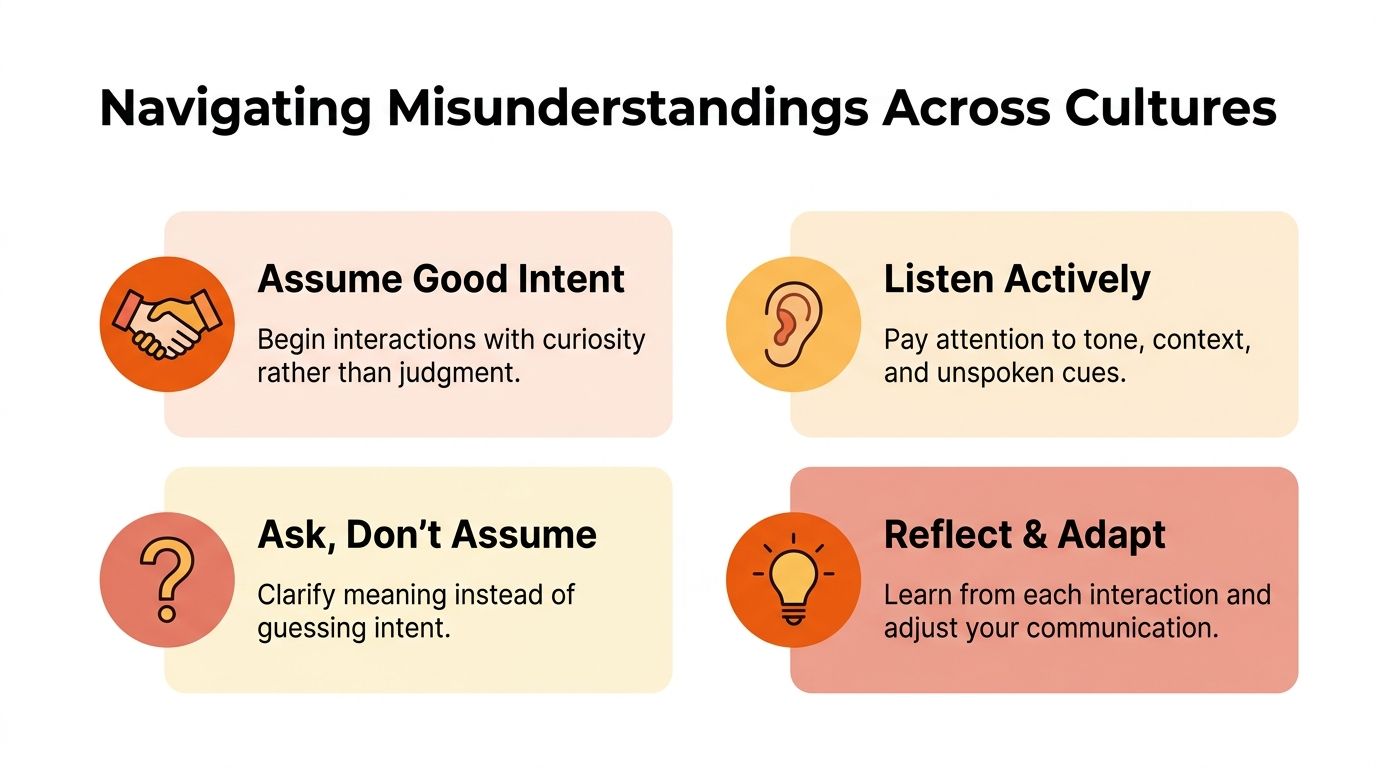
A manager in one country may think the message is perfectly clear. A colleague in another country may read it as flexible, indirect, or even slightly impolite. Neither person is careless. They're bringing different communication habits to the same four letters.
Why non-native speakers get stuck
Some non-native English speakers learn ASAP as a direct dictionary equivalent of “quickly.” But in real use, it often carries social meaning too. It can imply authority, frustration, pressure, or expected reprioritization.
Those differences matter because misunderstandings here don't look dramatic. They show up as slower responses, quiet resentment, follow-up messages, and deadlines missed for reasons nobody names directly.
A safer approach for multicultural teams
If your team includes non-native speakers, don't rely on ASAP alone. Use a phrase that answers the receiver's unspoken questions.
Try this checklist before sending:
- State the deadline: “Please send this by 3 PM.”
- Explain the reason: “The client review starts after that.”
- Name the priority level: “This takes priority over the newsletter draft.”
- Invite constraint sharing: “If that timing won't work, tell me now.”
If your message crosses cultures, clarity is more respectful than brevity.
This issue appears in many expressions, not just ASAP. If you're interested in how meaning shifts across languages and settings, this discussion of cultural connotations of common phrases gives a useful reminder that direct translation rarely captures tone perfectly.
How to Write and Say ASAP Correctly
The mechanics are simple, but readers usually want an exact rule.
Capitalization
In most professional writing, ASAP in all caps is the standard form. Major dictionaries list the term that way, including Merriam-Webster. If you are writing emails, internal memos, slide decks, or client-facing updates, all caps is the safest default.
Lowercase asap is common in texting, direct messages, and casual team chat. It is not usually treated as a different meaning; it just looks more informal.
Editorial copy is less rigid. Some publications keep acronyms in caps, while others apply house style for common initialisms and internet-era shorthand. If you're writing for a publication, brand team, or academic department, follow that style sheet rather than guessing.
Pronunciation
The common spoken form is “ay-sap.” In conversation, that is usually clearer and faster than spelling each letter one by one. MReach’s explanation of what ASAP means also notes the familiar “ay-sap” pronunciation tied to military radio-style usage.
Punctuation and sentence placement
ASAP usually works best near the verb it modifies:
- Please send the contract ASAP.
- Can you call me as soon as possible?
- We need to fix this promptly.
You generally do not need commas around it. In formal writing, it often reads better at the end of a sentence than wedged into the middle. I also avoid stacking it with other urgency words like “immediately” or “urgent,” because that usually makes the sentence louder, not clearer.
Example sentences
- Email: Please send the revised agenda ASAP so I can share it before the board call.
- Work chat: Can you check the staging bug ASAP? The release is blocked.
- Text message: call me asap when you leave the meeting.
- Client update: We need your approval ASAP to keep the launch date unchanged.
- Internal note: If legal signs off ASAP, we can publish this afternoon.
Is ASAP acceptable in formal writing?
Sometimes. In business email and routine internal communication, ASAP is widely understood and acceptable. In highly formal writing such as contracts, academic prose, official policies, or executive communication where precision matters, a specific deadline is usually better: “by 4 PM Friday” is stronger than “ASAP.”
If I am writing to a client or someone senior, I usually replace ASAP with a time or event-based deadline. It sounds more professional and gives the other person something measurable to act on.
Smarter Communication Polite Alternatives to ASAP
If ASAP creates confusion, the fix isn't to avoid urgency. The fix is to express urgency more clearly.
What to use instead
The best replacement depends on what you mean. Do you want immediate action, a same-day response, or just higher priority than usual?
Here is a practical comparison.
Communicating Urgency with Clarity
| Instead of 'ASAP', try... | When to Use It | Example Sentence |
|---|---|---|
| By 2 PM today | When you have a firm deadline | Could you send the final slide deck by 2 PM today? |
| As soon as you finish the current ticket | When you want reprioritization, but not interruption | Please review this as soon as you finish the current ticket. |
| Today, if possible | When speed matters but some flexibility is acceptable | I'd appreciate a reply today, if possible. |
| This is the top priority | When the receiver has multiple tasks and needs ranking | Please handle this first. It's the top priority. |
| Before the client call | When the deadline is tied to an event | Can you update the summary before the client call? |
| When you have a moment, but preferably this morning | When you want a polite, softer request | Could you check the draft when you have a moment, preferably this morning? |
| Please confirm whether you can do this today | When capacity may be an issue | Please confirm whether you can do this today, so I can plan next steps. |
Why these alternatives work better
They remove guesswork. The receiver doesn't have to infer whether you're asking for speed, a deadline, or a priority shift.
They also sound more professional. “ASAP” can come across as impatient when overused. A specific sentence often sounds calmer and more competent, even when the deadline is tight.
For sharper wording, this guide on conciseness in writing is helpful because good urgent communication is usually short and specific, not dramatic.
A clear deadline protects both people. The sender gets better follow-through, and the receiver knows what success looks like.
When ASAP Means Something Else The Technical Definition
In most conversations, asap stands for “as soon as possible.” In niche technical contexts, though, ASAP can refer to Asynchronous Array of Simple Processors. That meaning appears in computing and hardware discussions, not in ordinary workplace messaging.
For most readers, the important point is not the processor architecture itself. It is that acronyms change meaning by field. In an email, text, or meeting request, ASAP almost always signals urgency. In technical documentation, context decides.
That same shift happens across everyday communication. In workplace writing, ASAP often marks priority. In texting, it usually means “reply or act soon,” often with a more casual tone. And in spoken requests like “call me ASAP,” people usually hear not just speed but concern: the phrase implies the matter should be handled promptly, often within minutes or as soon as the person is free.
I read “call me ASAP” as more loaded than “text me when you can.” The first suggests urgency or a problem to solve; the second leaves room to respond later without much social risk.
If you're reading code comments, hardware documentation, FPGA discussions, or AI acceleration notes, don't assume ASAP means “quickly.” Technical writing is full of acronyms with multiple meanings, which is why context matters so much.
The same issue comes up with other terms in audio and software. For example, if you've ever seen SRT in transcription or video workflows, this explainer on what Does SRT Stand For shows how easily acronym confusion can spread across fields.
Frequently Asked Questions
What is the full form of ASAP?
ASAP is the short form of as soon as possible. It is used to show that something should be done quickly, without unnecessary delay. In business writing, it usually marks urgency more than it sets an exact deadline.
What does ASAP mean in texting?
In texting, ASAP still means as soon as possible, but the tone is often softer than in formal work email. Lowercase asap is common in texts and chat, and the expected response window depends on the relationship. A friend texting “reply asap” may mean “when you see this,” while a coworker may mean “before the next meeting.”
Should ASAP be capitalized?
Usually, yes in professional writing. ASAP in all caps is the standard form in business communication and dictionary entries, while asap is common in casual texting and chat. If you are writing for an organization with a style guide, follow that house style.
What does “call me ASAP” usually mean?
It usually means the sender wants a fast response and prefers a phone call over back-and-forth texting. The phrase often carries more emotional weight than plain urgency, suggesting concern, a problem, or something easier to explain live. If your relationship is not very casual, recipients will read it as “call me as soon as you reasonably can.”
Is ASAP okay in formal writing?
It is acceptable in many professional emails and internal messages, but it is often too vague for high-stakes formal writing. In contracts, academic work, policies, or sensitive client communication, a specific deadline is usually better. “Please reply by 5 PM” is clearer than “please reply ASAP.”
What is another abbreviation for ASAP?
There is no perfect substitute with exactly the same tone and familiarity. People sometimes use STAT in medical or emergency contexts, but that is much stronger and more specialized. In regular work, a plain-language alternative such as “by noon,” “today if possible,” or “as soon as you’re free” is usually better than swapping in another abbreviation.
If you write emails, specs, posts, or code comments all day, RewriteBar can help you turn vague urgency into clear language without slowing down. It works in any macOS text field, so you can rewrite “ASAP” requests into precise, polite messages wherever you’re writing.
About the Author
Mathias Michel
Maker of RewriteBar
Mathias is Software Engineer and the maker of RewriteBar. He is building helpful tools to tackle his daily struggles with writing. He therefore built RewriteBar to help him and others to improve their writing.

More to read
Set Up Automatic Email Response Outlook: 2026 Guide
Master automatic email response outlook for desktop, web, and mobile. Discover OOO vs. rules and use professional templates for 2026. Get started now!
Business Email Etiquette Guide for 2026
Master business email etiquette in 2026. Our guide covers principles, templates, tone, & common mistakes with examples for professional emails.
Master Blind Carbon Copy Gmail for Professional Use
Master the blind carbon copy gmail. This guide covers how to use BCC on all devices, etiquette, privacy risks, and avoid common mistakes for professional use.
Tags
Written by
Mathias MichelPublished
April 17, 2026